 Comparison
Texas Rig vs Carolina Rig for Beginners
Table of Contents
- Texas Rig vs Carolina Rig: The Core Difference
- Texas Rig Setup for Beginners
- Carolina Rig Setup for Beginners
- When to Use a Texas Rig
- When to Use a Carolina Rig
- Texas Rig vs Carolina Rig: Feature Comparison
- Beginner Tackle Recommendations
- Common Beginner Mistakes and Troubleshooting
- Your First Cast: Practice and Retrieve Tips
- Frequently Asked Questions
Last Updated: October 5, 2026
Texas Rig vs Carolina Rig: The Core Difference
When you're starting out in fishing, choosing between a Texas rig and a Carolina rig can feel overwhelming. Both are foundational techniques that work in freshwater and saltwater, but they excel in different situations.
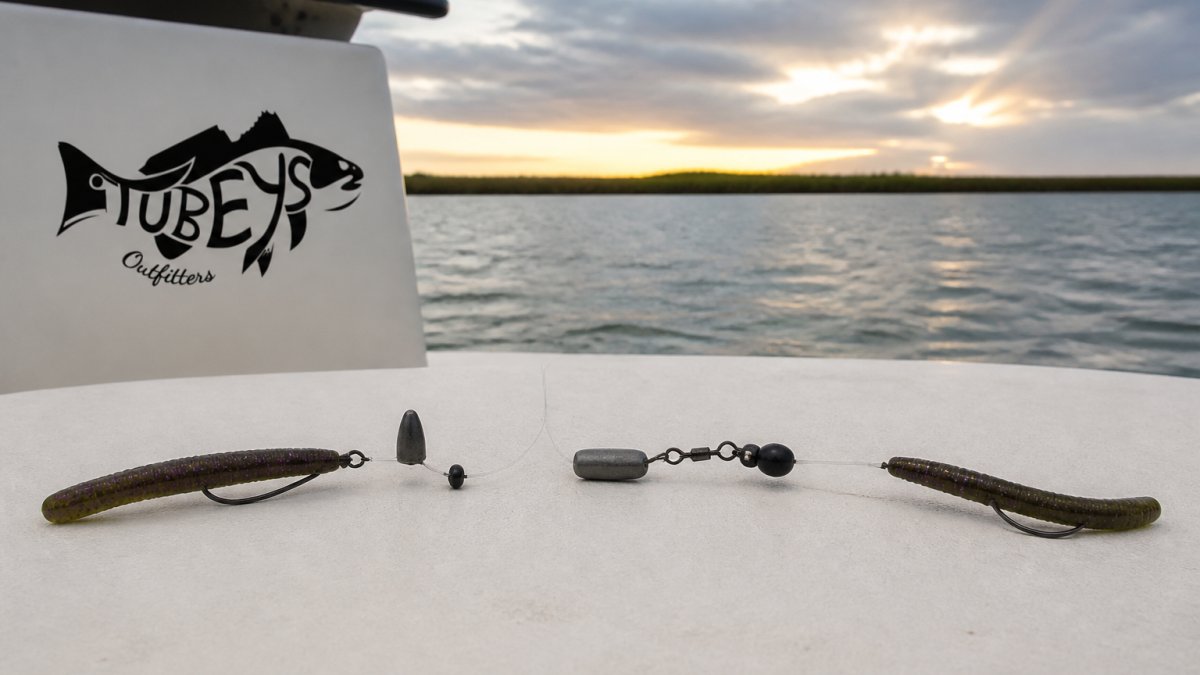
The core distinction comes down to how the weight and lure interact. A Texas rig positions the sinker directly above the hook, keeping everything compact and weedless. A Carolina rig separates the weight from the lure using a leader, letting the soft plastic move more freely above the bottom.
Both rigs work in saltwater and freshwater. In the Lower Laguna Madre and similar inshore flats, the Carolina rig shines for open water and sandy bottoms. The Texas rig dominates around mangrove roots, oyster shells, and dense grass.
The real advantage of learning both? You're never unprepared. When conditions change or fish aren't cooperating, switching rigs can be the difference between a slow day and a successful one.
Texas Rig Setup for Beginners
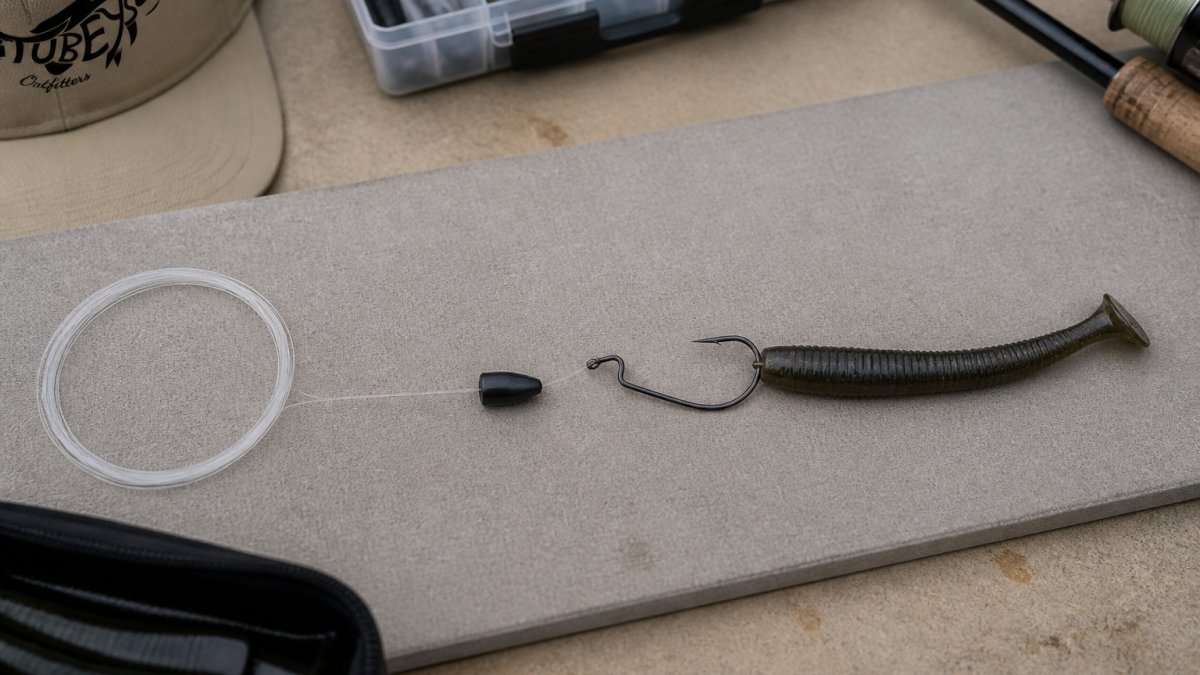
A Texas rig is the simplest weedless presentation you can tie, and it is the one most inshore anglers in the Lower Laguna Madre reach for when redfish and trout are pinned to grass, shell, and mangrove roots. The whole rig is four components in a fixed order: main line, bullet sinker, offset hook, soft plastic. Get the order right and the rig fishes correctly every time.
Component Order, Step by Step
- Main line. Spool 15- to 20-pound monofilament for freshwater bass, or 20- to 25-pound for saltwater redfish and spotted seatrout. Braid in the 20- to 30-pound class also works and cuts grass better, but it is less forgiving for beginners learning to feel bottom.
- Bullet sinker. Thread the line through the bullet weight before you tie anything. The sinker must slide freely on the main line. If it binds, you have the wrong weight or a burred line.
- Offset hook. Tie the offset hook directly to the main line with a Palomar knot. The Palomar is stronger than an improved clinch and easier to tie in wind. The offset eye angles away from the shank so the hook rides point-up once the plastic is threaded.
- Soft plastic. Insert the hook point about a quarter-inch into the nose of the plastic, push it through, rotate, and bring the point back through the body so it sits flush and weedless. The plastic should hang straight, not kinked.
When the rig is assembled, the bullet sinker rests against the hook eye. On the cast it slides up the line; on the retrieve it slides back down and ticks the bottom. That sliding action is the mechanism that separates a Texas rig from a Carolina rig.
Starter Ranges That Actually Work
Beginners get lost in tackle aisles because nobody gives them a starting range. Use these and adjust from the water, not the shelf.
| Component | Freshwater start | Saltwater inshore start |
|---|---|---|
| Main line | 15- to 20-lb mono | 20- to 25-lb mono or 20- to 30-lb braid |
| Bullet sinker | 1/8 to 3/8 oz | 1/8 to 1/4 oz |
| Offset hook | 2/0 to 4/0 | 2/0 to 4/0 |
| Soft plastic | 4- to 6-in worm or creature | 3- to 5-in shrimp, mullet, or paddle-tail |
Match the hook to the plastic: a 4-inch worm pairs with a 2/0 or 3/0, a 6-inch worm with a 3/0 or 4/0. In the Lower Laguna Madre, where you are often fishing 2 to 4 feet over sand, mud, and scattered shell, start with a 1/8-ounce bullet and a 3/0 offset hook on a 4-inch shrimp or mullet imitation. That combination sinks slowly, stays weedless through grass edges, and still lets you feel a redfish mouth the bait.
Why the Order Matters
If you tie the hook first and try to add the sinker afterward, you cannot. The bullet sinker has to go on before the knot. If you thread the plastic before the hook is tied, you will fight the line through the bait. The order is not a preference, it is a constraint of how the rig is built. Learn it once and you can rig a Texas in under a minute, even in a chop.
Rigging for Saltwater Grass and Shell
In the Lower Laguna Madre and similar flats, the Texas rig's job is to slip through grass and over shell without hanging. Pegging the sinker with a small rubber bobber stop is a common trick when you want the weight to stay tight to the hook for punching through matted grass. Leave it unpegged when you want the free-sliding action for a more natural fall over sand and scattered shell. Both are correct; the choice depends on whether you are punching or finessing.
Carolina Rig Setup for Beginners
Components and Assembly
A Carolina rig uses five components: main line, barrel swivel, leader line, sinker, and soft plastic lure. The extra pieces give you more control over depth and lure action.
Start with your main line, the same 12- to 25-pound monofilament you'd use for a Texas rig. Tie this to one end of a barrel swivel using a Palomar knot.
Tie your sinker to the other end of the barrel swivel. Use a surgeon's knot or improved clinch knot. The sinker should be fixed, not sliding. Common weights are 1/4-ounce to 1/2-ounce, depending on depth and current.
Now tie your leader line to the barrel swivel. This is where Carolina rigs get flexible. Leader length typically ranges from 18 inches to 3 feet.
Finally, tie your soft plastic to the end of the leader using the same offset hook you'd use for a Texas rig. The lure now sits above the sinker, connected by the leader line. This separation is the Carolina rig's defining feature.
Leader Length and Spacing
Leader length is the single most important variable in a Carolina rig setup. It controls where your lure sits in the water column and how it behaves during the retrieve.
In the Lower Laguna Madre, where you're fishing 2 to 6 feet of water over sand and mud, an 18- to 24-inch leader keeps the lure working near the bottom where redfish hunt.
In deeper freshwater lakes or saltwater channels, extend the leader to 3 feet or more. A longer leader lets the lure suspend higher above the sinker, creating more separation and a more natural appearance.
Leader line should be slightly lighter than your main line, fluorocarbon is preferred because it's less visible and more abrasion-resistant. If your main line is 20-pound, use 15- or 17-pound fluorocarbon for the leader.
The spacing between the sinker and the barrel swivel matters too. Keep it tight, less than an inch. This prevents the sinker from sliding up the line and creating slack, which kills your ability to detect bites.
When to Use a Texas Rig
Heavy Cover and Shallow Water
The Texas rig is built for places where other rigs fail. Dense vegetation, submerged timber, oyster shells, and mangrove roots are where the Texas rig shines.
The weedless presentation is the reason. The offset hook rides point-up, protected by the soft plastic body. You can throw into thick grass clumps, around fallen trees, and through oyster beds without constant hangups. This makes the Texas rig the best choice for aggressive, cover-focused fishing.
Shallow water, anything under 6 feet, favors the Texas rig. The compact presentation and light sinkers let you work lures slowly and deliberately. In freshwater lakes with heavy aquatic vegetation or in the shallow grass flats of inshore saltwater, the Texas rig is often your first choice.
Redfish in the Lower Laguna Madre often hold tight to structure. Mangrove roots, shallow grass beds, and sandy points with scattered shell all require a weedless rig. A light Texas rig with a 1/8-ounce sinker lets you creep through these areas and trigger strikes from fish that might ignore faster presentations.
Saltwater Inshore Applications
Saltwater inshore fishing, especially in the Lower Laguna Madre and similar flats, benefits tremendously from the Texas rig. Redfish, spotted seatrout, and flounder all respond to this presentation.
The key is matching your soft plastic color to local forage. Mullet patterns, shrimp-colored plastics, and natural baitfish colors work best. Pair these with light sinkers (1/8- to 1/4-ounce) and fish slowly along grass edges, around shell, and over sandy bottom.
Wind and current affect your choice. On calm days with light current, the Texas rig's lighter weight and compact profile let you make precise casts and maintain control. On windier days or in strong tidal flow, you might need a heavier sinker to maintain bottom contact, but the Texas rig still outperforms the Carolina rig in heavy cover.
When to Use a Carolina Rig
A Carolina rig earns its place when the fish are not tight to cover, when the bottom is open, or when you need the lure to hang above the sinker instead of dragging behind it. The decision is not "deep versus shallow" alone. It is depth, cover, wind, bottom type, and what you are trying to make the lure do.
The Decision Guide
Use this matrix to pick a rig on the water. Read across the row that matches your conditions.
| Condition | Better rig | Why |
|---|---|---|
| 2 to 6 ft, grass, shell, or mangrove roots | Texas | Weedless offset hook slides through cover |
| 2 to 6 ft, open sand or mud flat | Either, lean Carolina | Separated lure draws strikes from cruising fish |
| 6 to 15 ft, scattered structure | Carolina | Leader lets the lure swim above the sinker |
| 15 ft and deeper, channels or drop-offs | Carolina | Fixed sinker holds bottom while the lure suspends |
| Heavy wind, need to hold bottom | Carolina | Heavier fixed sinker stays put |
| Calm, need a subtle fall | Texas | Light sliding bullet sinks slowly and naturally |
| Fishing a goal of covering water fast | Carolina | Long casts, steady drag, lure stays in the zone |
| Fishing a goal of picking apart cover | Texas | Precise casts into small holes |
In the Lower Laguna Madre, the Carolina rig is the call when you are working open sand and mud between grass beds, when a stiff southeast wind is pushing you and you need a heavier fixed sinker to stay in contact, or when redfish and trout are suspended just off the bottom and ignoring a dragging bait. The Texas rig is the call when the fish are buried in grass, shell, or roots.
Depth, Cover, and Bottom Type
Depth sets the leader length. Cover sets the rig choice. Bottom type sets the sinker weight.
- Depth. In 2 to 6 feet, run an 18- to 24-inch leader so the lure stays near the bottom where redfish and trout feed. In 6 to 15 feet, extend to 24 to 36 inches. In deeper channels or freshwater lakes past 15 feet, 3 feet or more lets the lure suspend and swing freely.
- Cover. Open bottom, sand, mud, and scattered shell favor the Carolina rig. Dense grass, timber, and oyster clusters favor the Texas rig because the offset hook stays weedless.
- Bottom type. Sand and hard shell transmit vibration well, so you feel the sinker ticking. Soft mud swallows the sinker and mutes feel, so go lighter and slow down. In the Lower Laguna Madre, the mix of sand, mud, and scattered shell means you will often switch sinker weight within a single drift.
Wind and Current
Wind is the variable beginners underestimate. A 1/4-ounce fixed sinker that holds fine on a calm morning will drag in a 15 mph afternoon breeze. When the wind picks up, step up to 3/8 or 1/2 ounce on the Carolina rig and shorten your leader by a few inches so the lure stays in the strike zone instead of swinging. On calm days, drop back to 1/4 ounce and lengthen the leader for a more natural presentation.
Tidal current in inshore water behaves the same way. Moving water pushes the sinker, so heavier weight and a shorter leader keep the lure where you want it. Slack water lets you fish lighter and longer.
Bite Detection and the Switch
A Carolina rig's fixed sinker creates a direct connection to the bottom. You feel the tick of shell, the drag of mud, and the tap of a fish picking up the lure. That sensitivity is the reason to switch when a Texas rig is not producing. If you are missing fish, if the bites feel mushy, or if the fish are suspended rather than on the bottom, the Carolina rig's separated leader and fixed weight will often turn a slow day around.
A Simple On-the-Water Test
If you are unsure which to throw, start with the Texas rig because it is faster to rig and more forgiving in cover. If you go 20 to 30 minutes without a bite and you are fishing open bottom or suspended fish, switch to a Carolina rig with a 24-inch leader and a 1/4-ounce fixed sinker. If the wind is up, go to 3/8 ounce. That single switch covers most beginner situations in both freshwater lakes and inshore flats.
Texas Rig vs Carolina Rig: Feature Comparison
| Feature | Texas Rig | Carolina Rig | Best For |
|---|---|---|---|
| Weedless Design | Excellent (hook protected) | Moderate (exposed hook) | Heavy cover, shallow grass |
| Depth Range | Shallow to moderate (under 15 ft) | Moderate to deep (any depth) | Shallow flats; deep lakes/channels |
| Sinker Type | Sliding bullet | Fixed to swivel | Flexibility; direct feel |
| Bite Detection | Moderate (sinker interference) | Excellent (direct connection) | Subtle bites, deep water |
| Lure Freedom | Limited (compact) | High (separated by leader) | Natural movement, open water |
| Setup Complexity | Simple (4 pieces) | Moderate (5 pieces) | Quick rigging, precise control |
| Best Cover | Weeds, timber, shell | Sand, mud, open bottom | Dense vegetation; open flats |
| Saltwater Use | Excellent (inshore flats) | Excellent (channels, deep) | Redfish/trout in grass; deep structure |
Beginner Tackle Recommendations
Starting with the right gear makes learning these rigs much easier. You don't need expensive equipment, but quality matters.
For soft plastics, choose 4- to 6-inch worms or creature baits. These sizes work in both freshwater and saltwater.
For hooks, offset 2/0 to 4/0 sizes cover most beginner situations. Quality matters here, cheap hooks bend and dull quickly. A good offset hook stays sharp and holds its shape through multiple casts.
For sinkers, start with an assortment of 1/8-, 1/4-, and 3/8-ounce bullet weights for Texas rigs, and 1/4- to 1/2-ounce fixed sinkers for Carolina rigs. This range handles shallow to moderate depths and most wind and current conditions.
For line, 15- to 20-pound monofilament works for both rigs in freshwater. In saltwater, step up to 20- to 25-pound.
A barrel swivel is essential for Carolina rigs. Quality matters, cheap swivels break under pressure. A good ball-bearing swivel prevents line twist and lasts through hundreds of casts.
Common Beginner Mistakes and Troubleshooting
Beginners often make the same mistakes with both rigs. Knowing what to watch for saves frustration and improves your success rate.
Oversized sinkers are the most common error. Too much weight makes bite detection nearly impossible and creates an unnatural presentation.
Hook size mismatches happen when anglers use hooks that are too large or too small for their soft plastics.
Hangups and snags mean your sinker weight is wrong for the cover. In heavy grass or timber, reduce weight or switch to a lighter Texas rig.
Missing bites on a Carolina rig usually means your leader is too long or your sinker is too heavy. Shorten the leader to 18 inches and reduce sinker weight by half.
Slack line during the retrieve kills both rigs. Keep steady tension on the line at all times. A slow, deliberate retrieve with pauses works better than fast, constant motion.
Line twist on Carolina rigs indicates a cheap or broken barrel swivel. Replace it immediately. Twisted line breaks easily and creates tangles that waste time and cost fish.
Your First Cast: Practice and Retrieve Tips
Before you head to the water, practice your casting and retrieve at home. Even 10 minutes of dry practice makes a huge difference.
For the Texas rig, focus on a slow, deliberate retrieve. Cast out, let the rig sink to the bottom, then work it with short twitches and pauses.
For the Carolina rig, use a slower retrieve than you might expect. The sinker stays on bottom while the lure works above it.
In shallow saltwater like the Lower Laguna Madre, use the lightest sinker that still lets you feel the bottom. Redfish and trout in 2 to 4 feet of water are sensitive to heavy presentations.
Wind affects your presentation. On calm days, light sinkers and slow retrieves work best. On windy days, you might need slightly heavier sinkers to maintain control, but keep the retrieve slow.
Practice detecting bites by feel. The rod should be in your hand at all times, not resting on the gunwale or bank. You're looking for a slight tap, a weight change, or resistance.
Choosing between a Texas rig and a Carolina rig doesn't have to be complicated. Start with quality soft plastics and tackle from Tubey's Outfitters, gear designed and tested by anglers for real-world fishing conditions, and you'll have the foundation to build your skills and catch more fish.
Frequently Asked Questions
When should you use a Carolina rig instead of a Texas rig?
Use a Carolina rig in deeper water, open structure, and when you need better bottom contact feedback. The separated weight and lure let the soft plastic fall naturally, making it ideal for detecting subtle bites on sandy or rocky bottoms. A Texas rig works better in heavy cover and shallow water where a weedless presentation prevents snags. For saltwater inshore fishing in the Lower Laguna Madre, choose a Carolina rig when working deeper channels and a Texas rig around grass beds and oyster reefs.
Can you use Texas and Carolina rigs in saltwater?
Yes, both rigs work effectively in saltwater. Texas rigs excel around coastal structure like mangrove roots, oyster reefs, and dense seagrass in shallow water. Carolina rigs perform well in deeper channels and open flats where you need better lure separation and bottom detection. Inshore saltwater applications like Lower Laguna Madre fishing benefit from both rigs depending on depth and cover. Use heavier sinkers and more abrasion-resistant line for saltwater conditions.
Which rig is easier for a beginner to learn?
The Texas rig is generally easier for beginners because it has fewer components and simpler assembly. You only need a hook, sinker, and soft plastic, making it faster to tie and adjust. The Carolina rig requires managing leader length and spacing, which adds complexity. However, both rigs are learnable with practice. Start with a Texas rig to build confidence, then graduate to a Carolina rig once you're comfortable with basic casting and retrieves.
What type of soft plastic works best with each rig?
Texas rigs work with virtually any soft plastic shape: tubes, crawdads, worms, and creature baits. The weedless design protects the hook, so lure choice depends on target species and water conditions. Carolina rigs typically pair better with smaller, more subtle presentations like shrimp imitations and straight-tail worms because the separated weight creates a natural fall. In saltwater, match your soft plastic color and size to local forage, mullet and shrimp patterns are proven choices for redfish and trout in coastal waters.
How do I know if I'm getting a bite or just hitting the bottom?
A true bite feels like a sudden tug or weight change; bottom contact feels like consistent pressure or dragging. With a Carolina rig, the separated weight gives clearer feedback, you'll feel the sinker bump while the lure is above it. With a Texas rig, pause your retrieve and wait for the rod to load; a feeding fish pulls harder than sand or rocks. Practice in shallow, clear water first so you can see what's happening on the bottom. This helps you learn the difference between snags and strikes.