 how-to
Soft Plastic Fishing Techniques for Coastal Water
Table of Contents
- Understanding Soft Plastics for Inshore Fishing
- Best Soft Plastic Colors for Redfish and Coastal Species
- Selecting the Right Jig Head Weight and Profile
- How to Rig Soft Plastics Weedless for Shallow Flats
- Inshore Fishing Retrieve Techniques That Trigger Strikes
- Matching the Hatch: Soft Plastic Profile Selection
- Reading Tides, Structure, and Water Clarity
- Common Mistakes and How to Troubleshoot Non-Committal Fish
- Maintenance and Storage of Soft Plastics
- Frequently Asked Questions
Last Updated: September 29, 2026
Understanding Soft Plastics for Inshore Fishing
Soft plastic fishing techniques are the foundation of modern coastal and inshore fishing. These lures work because they mimic natural baitfish and crustaceans that redfish, trout, snook, and flounder actually eat. The fundamentals remain the same: match the hatch, fish the right depth, and use a retrieve that triggers strikes.
Soft plastics feel natural in a fish's mouth and hold on longer than hard baits, that extra half-second often means the difference between a hookup and a missed strike. A single paddle tail or curly kicker tail can be rigged weedless on shallow flats, bounced on the bottom in deeper channels, or worked through structure. Understanding water conditions, tidal flow, water clarity, and structure, is critical. A retrieve that works on a clear day might fail in murky water, which is why adjusting your approach matters more than owning a tackle box full of lures.
Best Soft Plastic Colors for Redfish and Coastal Species
Color selection depends on water clarity more than anything else.
Clear water (visibility 3+ feet):
- Natural shad patterns (silver, pearl, natural gray) moonstone marvel, pumpkin shad, and or mimic
- Subtle greens and browns. Coastal Guac and Tubeys Beer.
- Translucent whites. White and pink or white and chartruse.
Stained water (visibility 1-3 feet):
- Chartreuse and white combinations. Like Ole Banana Slammer
- Bright orange tails. Orange Crush
- Neon colors that create contrast. Bleeding Chartruse or blue Neon
Murky water (visibility under 1 foot):
- Black and purple. Purple Slammer or Texas Roach or even Sl1mpk.
- Dark greens. Coastal guac again or limited time crabby patty.
- Solid dark colors with flash. Texas Roach
Redfish respond to orange and red accents around structure. Trout in the Lower Laguna Madre love natural shad patterns with pearl. Flounder prefer darker lures worked slowly on the bottom. Snook in shallow water often hit bright colors at dawn and dusk.
Fish see contrast and movement first. Pick a color that matches water clarity, then focus on your retrieve. If you're not getting strikes, change your retrieve speed before you change colors.
Selecting the Right Jig Head Weight and Profile
Jig head weight controls how quickly your soft plastic reaches the strike zone, how long it stays there, and how much bottom feedback you feel. Getting this right separates consistent catchers from anglers fishing the wrong depth.
Depth-based weight selection:
Shallow flats (under 2 feet): Use 1/8 oz to 1/4 oz. Lighter heads keep lures in the strike zone longer and reduce spooking in shallow water.
Medium depth (2-4 feet): Use 1/4 oz to 3/8 oz. This balances depth control with bottom feel and works for flats transitions and shallow drop-offs.
Deep channels (4+ feet): Use 3/8 oz to 1/2 oz. Heavier heads reach bottom quickly and maintain position in moving water and tidal flow.
How head shape affects lure action:
Round head: The most versatile profile. Casts cleanly, moves naturally, and works equally well on flats and in channels. It's forgiving for beginners.
Football head: Stays on bottom longer due to its wide, flat base. Use this for flounder and trout in deeper channels where you need constant bottom contact. In the Lower Laguna Madre, a football head excels in deeper cuts where current runs stronger.
Shad-shaped head: Mimics actual baitfish profiles. Works best in clear water where fish inspect lures carefully. Redfish in clear flats often respond better to shad-shaped heads than round ones.
Weedless/cone head: Designed to slide through grass and structure without fouling. Essential for shallow-grass flats in spring and summer. In the Lower Laguna Madre, this is your go-to for dense seagrass beds.
Species-specific jig head preferences:
Redfish: Prefer 1/4 oz to 3/8 oz in shallow flats (under 3 feet). They hunt by sight and lateral line, so moderate weight keeps lures in the strike zone longer. In deeper channels, bump up to 3/8 oz or 1/2 oz.
Trout: Often respond better to lighter jig heads (1/8 oz to 1/4 oz). In the Lower Laguna Madre, trout in clear water often hit on the fall, so lighter heads extend fall time and increase strike opportunities.
Flounder: Require heavier jig heads (3/8 oz to 1/2 oz) for constant bottom contact. Flounder ambush rather than chase, so a heavy head bouncing along the bottom mimics prey they recognize.
Snook: Vary by location. In shallow mangrove water, use 1/8 oz to 1/4 oz. Around deeper structure and jetties, use 3/8 oz to 1/2 oz.
Bass (freshwater and brackish water): Prefer 1/4 oz to 3/8 oz in most conditions. Focus more on matching soft plastic profile to forage than on jig head weight.
How to Rig Soft Plastics Weedless for Shallow Flats
Weedless rigging keeps your soft plastic from hanging up in grass and shallow structure.
Basic weedless rig steps:
- Insert the hook point into the soft plastic head at a slight angle, about 1/4 inch deep
- Run the hook shaft through the center of the lure body to keep it straight
- Exit the hook point just before the tail without breaking through the plastic
- The hook point should be buried inside the soft plastic so it doesn't catch grass
The hook should be perfectly straight inside the lure. Test the rig by casting and watching it fall, it should drop straight down without rolling.
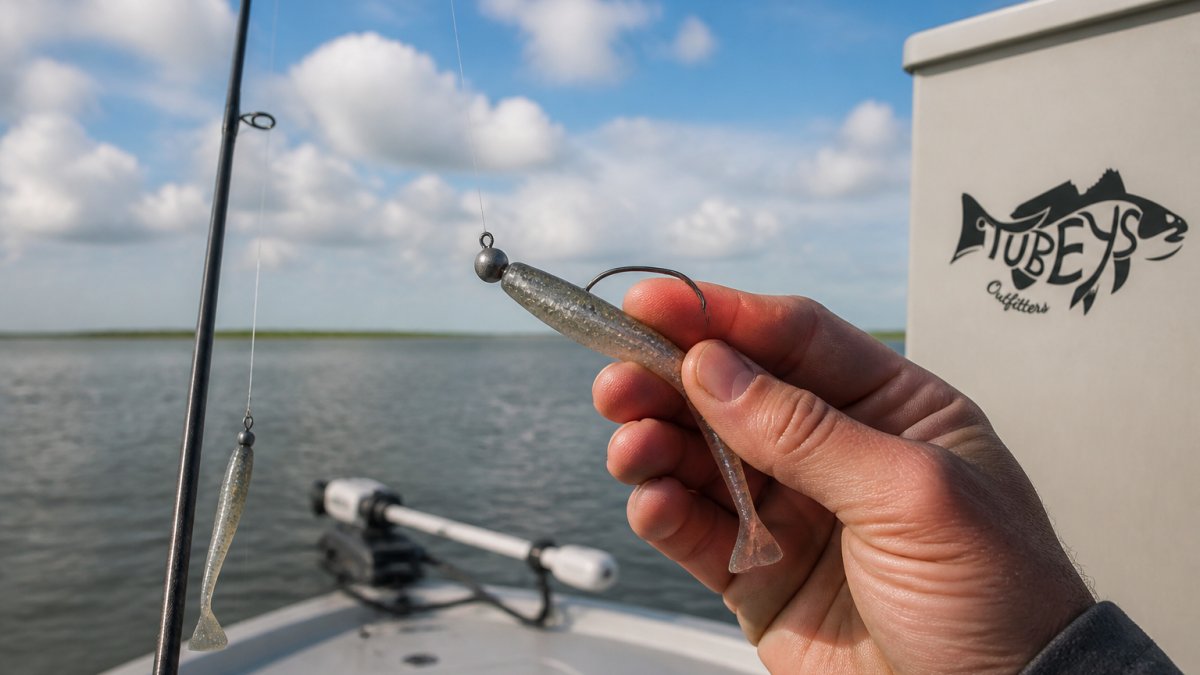
Use a short-shank hook for maximum weedlessness. A 2/0 or 3/0 hook works for most 3-4 inch soft plastics. Tie your jig head to braided line for sensitivity. Add a fluorocarbon leader (12-20 pound test) using an Albright knot. Fluorocarbon is nearly invisible underwater and resists abrasion from structure and grass.
Inshore Fishing Retrieve Techniques That Trigger Strikes
The retrieve is where soft plastic fishing techniques separate good anglers from great ones. Most fish don't chase lures, they strike when movement triggers an instinctive response.
The basic retrieve cadence:
- Slow and steady: 2-3 rod twitches per second. Best for clear water and cold months.
- Medium pace: 4-5 twitches per second with occasional pauses. Works in most conditions.
- Fast and aggressive: Quick, sharp twitches with no pause. Use when fish are active or in stained water.
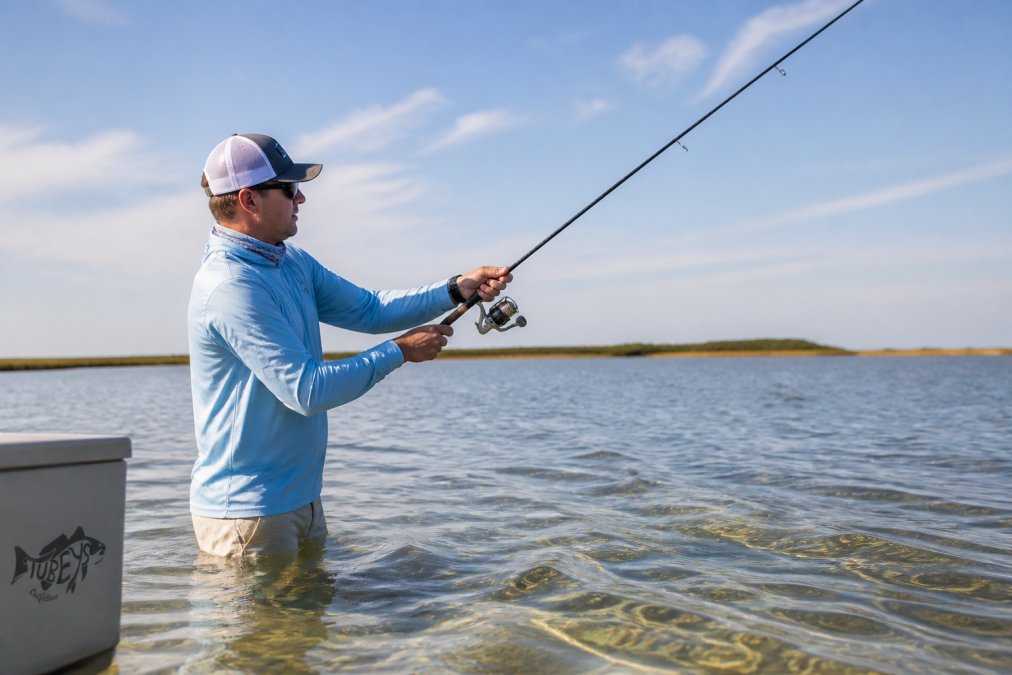
The pause is critical. After 3-5 twitches, stop and let the lure fall on slack line. This mimics an injured baitfish. Most strikes happen during the pause or on the first twitch after.
Walking speed retrieve: Hold the rod tip at 45 degrees and make small, rhythmic twitches while slowly moving the rod forward. The lure walks side-to-side like a wounded minnow. This works great for redfish in shallow water and snook around mangroves.
Bottom bouncing: Let the lure hit the bottom, then lift and drop repeatedly. This stirs up sediment and mimics a crustacean moving along the bottom. Flounder and trout love this in deeper channels.
Slack line retrieve: Cast, let the lure sink on completely slack line, then twitch with sharp upward rod movements. The lure darts and falls unpredictably, triggering strikes from non-committal fish.
Use your wrist and forearm, not your whole arm. Constant tension on the line helps you feel bites and maintain control.
Matching the Hatch: Soft Plastic Profile Selection
Matching the hatch means choosing a soft plastic profile that mimics actual baitfish and crustaceans in the water you're fishing.
How tail shape affects lure movement:
Paddle tail: Creates maximum vibration and flash. Displaces water aggressively, so fish feel it from farther away. Works in all clarity levels but excels in stained or murky water. In moving current, a paddle tail maintains action better than a curl tail.
Curl tail: Subtle, natural swimming motion. Mimics small baitfish with minimal vibration. Excellent for clear water and finicky fish. In slow-moving water or slack tide, a curl tail often outperforms a paddle tail.
Shrimp profile: Flat body with segmented design. Creates minimal vibration but maximum realism. Works best in clear water. In the Lower Laguna Madre, grass shrimp are primary forage in summer and fall. A shrimp profile fished slowly around seagrass beds triggers aggressive strikes from redfish and trout.
Craw profile: Mimics small crabs and crayfish. Excels on the bottom where it's most realistic. Flounder and trout love these with a bottom-bouncing retrieve. In freshwater and brackish systems, craw profiles outperform other profiles for bass.
Swimbait profile: Large, detailed profile mimicking bigger baitfish. Use when targeting larger redfish, snook, or flounder. In the Lower Laguna Madre, swimbaits work best in deeper channels and around structure.
Seasonal forage patterns in coastal inshore water:
Spring (March-May): Mullet and shad move into shallow flats to spawn. Use paddle-tail or shad-profile lures in natural colors. Fish are aggressive and will chase, so faster retrieves work.
Summer (June-August): Grass shrimp and small baitfish dominate. Switch to shrimp profiles and smaller curl-tail lures (2-3 inches). Fish feed heavily in early morning and late evening. In the Lower Laguna Madre, water is often clear, so natural colors and subtle retrieves work best.
Fall (September-November): Mullet and shad return to deeper water. Redfish and trout follow. Use larger paddle-tail and swimbait profiles (4-5 inches) in natural colors. Fish are aggressive as they prepare for winter.
Winter (December-February): Fish move to deeper channels and holes. Use heavier jig heads (3/8 oz to 1/2 oz) and slightly larger profiles (4-5 inches). Retrieves should be slower and more deliberate. Darker colors work better because fish rely more on lateral line detection.
Water clarity and profile selection:
Clear water (visibility 3+ feet): Use curl tails, shrimp profiles, and shad profiles in silver, pearl, natural gray, and translucent white. Slower retrieves allow fish time to inspect the lure.
Stained water (visibility 1-3 feet): Use paddle tails and profiles with bright accents (chartreuse, orange, white). Faster retrieves help fish find you.
Murky water (visibility under 1 foot): Use black, purple, and dark-green profiles. Paddle tails create the vibration fish need to find your lure when they can't see it.
Species-specific profile preferences:
Redfish: Respond to shrimp profiles and paddle tails equally well, depending on season. In spring and fall, paddle tails in natural colors trigger aggressive strikes. In summer, shrimp profiles fished slowly around structure work better.
Trout: Prefer curl-tail and shad-profile lures in natural colors. In winter, slightly larger profiles (4 inches) trigger strikes from bigger trout.
Flounder: Require craw profiles and paddle tails fished on the bottom. A profile mimicking a crab or small fish moving along the bottom triggers strikes.
Snook: Aggressive strikers that respond to paddle tails and swimbaits. In shallow mangrove water, use smaller profiles (3 inches) in natural colors. Around deeper structure, use larger profiles (4-5 inches).
Bass (freshwater and brackish): Prefer craw profiles and curl-tail lures. Profile matters less than action, a slow, deliberate retrieve with a curl tail often outperforms faster retrieves.
Reading Tides, Structure, and Water Clarity
Tidal movement is the heartbeat of inshore fishing.
Rising tide (flooding): Fish move shallow to feed. Flats that were dry become fishable. Work the edges where water meets grass. Current pushes baitfish toward structure.
Falling tide (ebbing): Fish retreat to deeper water. Focus on channels, drop-offs, and holes where water drains. Baitfish get funneled into tight areas.
Slack tide: The transition between rising and falling. Fish can be anywhere. Slower retrieves often work better.
Structure is where fish live. Seagrass beds, mangrove roots, oyster bars, and submerged wood all hold fish. Cast to the edge of structure, not the middle. Fish ambush prey at the boundary between open water and cover.
Water clarity controls visibility and fish behavior. Clear water means fish see your lure from farther away but also see the line and jig head, use lighter line and natural colors. Stained water reduces visibility, so bright colors and vibration help fish find your lure. Murky water requires dark profiles and slow retrieves.
Common Mistakes and How to Troubleshoot Non-Committal Fish
Non-committal fish follow your lure but don't bite. This happens when the retrieve doesn't trigger an aggressive response.
The problem: Your retrieve is too predictable.
The fix: Change your cadence mid-retrieve. Twitch fast for 3 seconds, pause for 2 seconds, then twitch slow. Vary the pattern so fish can't predict it.
The problem: The lure is too big or too small for the current baitfish.
The fix: Drop down a size. A 3-inch lure often outperforms a 4-inch lure when fish are picky.
The problem: You're fishing the wrong depth.
The fix: Feel the bottom with your jig head. Most strikes happen within 6 inches of the bottom or 6 inches below the surface.
The problem: Your terminal tackle is visible.
The fix: Add a fluorocarbon leader. Braided main line is visible in clear water; fluorocarbon is nearly invisible.
The problem: The hook isn't sharp enough.
The fix: Sharpen or replace hooks regularly. A dull hook skips off a fish's mouth.
Mistake | Cause | Solution |
|---|---|---|
Fish follow but don't strike | Predictable retrieve | Vary cadence and pause timing |
Lure feels lifeless | Wrong size or weight | Match baitfish size; adjust jig head |
Shallow strikes only | Fishing too deep | Feel bottom; adjust retrieve depth |
Line visibility spooking fish | Braided line in clear water | Add fluorocarbon leader |
Missed bites | Dull hook | Sharpen or replace hooks |
Maintenance and Storage of Soft Plastics
Soft plastics degrade over time if stored improperly. Heat, sunlight, and contact with certain materials break down the plastic.
Storage best practices:
- Keep soft plastics in a cool, dry place away from direct sunlight
- Store in original packaging or sealed tackle boxes
- Don't mix soft plastics with hard baits or metal jigs that can puncture them
- Keep them away from gasoline, sunscreen, and insect repellent
- Store at room temperature, not in hot vehicles
Field maintenance:
Rinse soft plastics with fresh water after saltwater fishing. Salt crystals degrade plastic over time. Dry them completely before storing. Replace torn or damaged lures, they don't move right and won't catch fish consistently.
Check your hooks before each trip. Replace hooks on expensive soft plastics rather than tossing the whole lure. Quality soft plastics from Tubey's Outfitters are built to last, and a fresh hook can give an older lure new life.
Soft plastic fishing techniques come down to three things: matching the conditions, reading the water, and adjusting your retrieve until fish respond. The Lower Laguna Madre, coastal bays, and shallow flats reward anglers who understand how tide, structure, and water clarity control fish behavior. Start with the basics, practice your retrieve, and pay attention to what works on any given day. Tubey's Outfitters soft plastics are designed by anglers who fish these same waters, tested in both saltwater and freshwater conditions, and built with the colors and action that trigger strikes when it matters. Get started with Tubey's Outfitters gear and put more fish in the boat.
Frequently Asked Questions
What is the best soft plastic color for clear water versus murky coastal conditions?
In clear water, natural colors like pearl, white, and translucent shades work best because fish see them clearly. In murky or stained water, use darker colors such as black, dark purple, or chartreuse—these create silhouette and vibration that fish detect in low visibility. For redfish in coastal flats, chartreuse and orange-belly patterns excel in both conditions. Match the baitfish in your area when possible, but don't hesitate to use high-visibility colors when water clarity drops below 2 feet.
How do you rig soft plastics weedless for inshore shallow water without losing action?
Use a weedless jig head with the hook point buried in the plastic's nose, or rig Texas-style with the hook point hidden inside the body. This prevents snagging in grass and structure while keeping the lure's tail action intact. For flats fishing, a 1/8 to 1/4 ounce weedless head works best—heavy enough to cast but light enough to drop slowly. Ensure the plastic is straight on the jig head to maintain natural movement. Test your rigging in hand before casting to confirm the tail moves freely.
Why aren't my soft plastics getting bites in shallow inshore water?
Check three things: retrieve speed (too fast or too slow kills strikes), lure profile (match local baitfish size and shape), and color (adjust for water clarity). Many anglers fish too fast in shallow water—slow your cadence and use a bottom-bouncing or slack-line retrieve that lets the plastic work near the strike zone. Also verify your jig head weight isn't dragging bottom so hard it spooks fish. If redfish or trout are present but not biting, switch colors or profiles rather than working the same lure repeatedly.
What soft plastic size and shape work best for redfish versus trout in coastal flats?
Redfish respond well to 3- to 4-inch paddle-tail and curl-tail plastics that mimic mullet and shrimp. Trout prefer smaller profiles—2 to 3 inches—with subtle action and thinner bodies. Flounder hunt larger meals, so 4- to 5-inch profiles with wider bodies work better. Match the hatch by observing what baitfish are active in your target water. Tubeys Outfitters soft plastics are designed with proven profiles and action for both species, tested in coastal conditions so you spend less time experimenting and more time catching.