
 how-to
How to Fish Texas Rig for Beginners
Table of Contents
- What Is a Texas Rig and Why Beginners Should Master It
- Components of a Texas Rig Setup
- Best Soft Plastic Baits for Texas Rig Fishing
- Texas Rig Hook Size Guide and Rigging
- Rod and Reel Setup for Texas Rig Success
- How to Retrieve a Texas Rig: Techniques and Cadence
- When to Use a Texas Rig and Reading Structure
- Common Mistakes to Avoid
- Frequently Asked Questions
Last Updated: September 26, 2026
What Is a Texas Rig and Why Beginners Should Master It
A Texas rig is a soft plastic rigging technique where a bullet weight slides freely above an offset worm hook, creating a weedless presentation that moves naturally through cover.
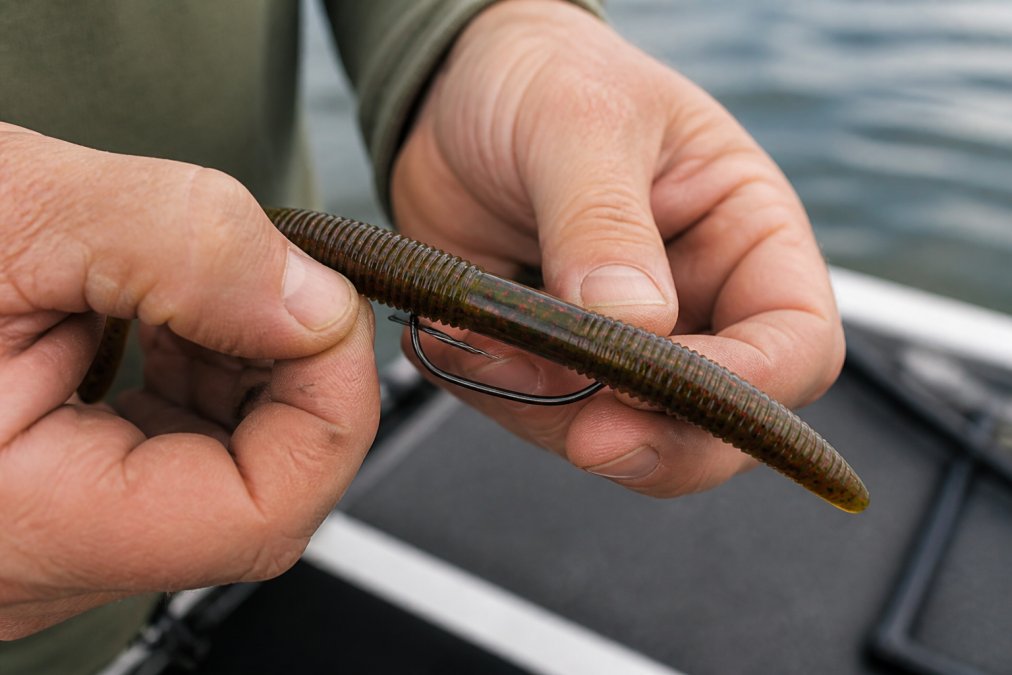
The Texas rig combines freedom of movement, weedless design, and bottom contact. The weight rides above the hook so your soft plastic swims freely, while the offset hook keeps the point tucked into the plastic, protecting it from weeds and debris.
Learning how to fish texas rig for beginners teaches fundamental skills that apply to every other technique: feeling bottom contact, working cover, and developing retrieve rhythm.
Components of a Texas Rig Setup
Every Texas rig has four essential parts: the bullet weight, the peg, the line, and the rigged soft plastic. Understanding each one changes how well your setup performs in different conditions.
Bullet Weight and Peg Selection
The bullet weight is a cone-shaped sinker that slides on your line above the hook, getting your bait down and creating a distinctive thump when it hits bottom or structure. Most anglers use weights between 1/4 ounce and 1 ounce, with shallow water calling for lighter weights and deep water or heavy cover needing more.
The peg is a small rubber or foam stopper that keeps the weight from sliding down onto the hook. With a peg, the weight stays in place and your bait presentation stays consistent. Test both tight pegging and leaving a tiny gap to see which feels better in your local water.
Weight selection depends on water depth and cover type:
- Shallow water (2-6 feet): 1/4 oz to 3/8 oz
- Medium depth (6-12 feet): 3/8 oz to 1/2 oz
- Deep water (12+ feet): 1/2 oz to 1 oz
- Heavy grass or wood: go one size heavier than you'd normally use
Line, Leader, and Knot Strength
Fluorocarbon offers better sensitivity and invisibility than monofilament. Line diameter affects how your bait falls and how well you feel the bottom, thinner line falls faster and feels more sensitive, while thicker line handles cover better. Most beginners start with 12-15 pound test monofilament or 10-12 pound fluorocarbon.
A Palomar knot is simple and strong; a snell knot is traditional and reliable. Practice one until you can tie it without thinking. Test your knot strength by tying it to a hook and pulling hard for 10 seconds, it should not slip or break.
Best Soft Plastic Baits for Texas Rig Fishing
The bait profile and action you choose directly impact how many bites you get. Different baits trigger different reactions from bass. Understanding when to use which bait separates consistent anglers from frustrated ones.
Water Clarity and Color Selection
In clear water, use natural colors (green pumpkin, watermelon, black, brown). In stained or murky water, use bright colors (chartreuse, white, orange, red). Transition periods often produce with either approach.
Color matters less than you think once you understand this principle:
Clear water: natural and translucent colors like watermelon, green pumpkin, pearl, silver, smoke, natural shad, shrimp, or baitfish patterns.
Stained water: stronger colors with contrast like brown, red, orange, gold, darker watermelon, chartreuse tail, or brighter baitfish colors.
Murky water: high-contrast colors like black, black/blue, dark purple, chartreuse, white, pink, or glow. The goal is visibility and silhouette.
Bait Profile and Action Matching
Bait profile is the shape and size of your plastic. Thin worms work when bass are inactive or pressured; creature baits with appendages create more vibration and trigger reaction bites. Action is how your bait moves through the water, some wiggle, others flutter, some rely on your retrieval technique. We design soft plastics with specific actions built in.
Match your bait profile to the situation:
- Pressured bass: thin 4-5 inch worms
- Active bass: creature baits with appendages
- Clear water: natural profiles
- Murky water: thick bodies with appendages
Texas Rig Hook Size Guide and Rigging
Hook size and gap directly affect your hook set success and bait rigging quality. Most beginners use hooks that are either too small or too large. The right size depends on your bait and target bass size.
Hook Gap and Point Selection
The hook gap is the distance between the point and the shank. For beginners, start with a 3/0 or 4/0 offset worm hook. The hook point must be sharp, run your thumbnail across it before every trip. If it catches and leaves a mark, it's sharp enough; if it slides smoothly, sharpen it or tie on a new hook.
Hook selection by bait size:
- 4-inch worms: 2/0 to 3/0 hook
- 5-inch worms: 3/0 to 4/0 hook
- Creature baits: 4/0 to 5/0 hook
- Thick baits: go one size larger
How to Thread the Hook Weedless
Threading the hook weedless is the most important rigging skill. Insert the hook point into the head of your soft plastic, push through about 1/4 inch, then rotate the hook so the point exits the side about 1/2 inch down. Keep the hook point tucked into the plastic so it doesn't catch on weeds or rocks.
The weedless rig steps:
- Insert hook point into plastic head
- Push through 1/4 inch
- Rotate hook to exit sideways
- Keep point tucked into plastic
- Slide plastic up the hook shank
- Center the bait on the hook
Rod and Reel Setup for Texas Rig Success
A medium-power rod with fast action works best for Texas rig fishing, medium power gives you backbone to set the hook and handle cover, while fast action keeps the tip sensitive. Pair this with a baitcasting reel with smooth drag and good line capacity. A 6.5:1 or 7:1 gear ratio lets you pick up slack quickly and work cover efficiently.
Rod and reel setup checklist:
- Rod power: medium
- Rod action: fast
- Reel type: baitcaster
- Reel ratio: 6.5:1 to 7:1
- Drag: smooth and adjustable
How to Retrieve a Texas Rig: Techniques and Cadence
How you retrieve your Texas rig matters as much as what you throw. A dead retrieve catches nothing. The right rhythm catches fish. Most beginners retrieve too fast or too slow. The key is matching your cadence to what bass are doing.
Bottom Contact and Hop Presentation
The bottom contact technique means keeping your bait in contact with the structure and bottom. This is where bass hide. Cast out, let your bait sink to the bottom, then work it with short hops. Each hop lifts your bait slightly, then lets it fall back down. The weight thumps bottom between each hop. This creates vibration and mimics wounded prey.
Hop retrieve steps:
- Cast and let bait sink to bottom
- Lift rod tip 12-18 inches (the hop)
- Drop rod tip back down
- Take up slack line
- Repeat until your bait reaches you
Retrieval Cadence Variations for Different Conditions
Cadence is the speed and rhythm of your hops. Cold water bass want a slower cadence. Warm water bass respond to faster movement. Overcast days often produce with a medium cadence. Sunny days sometimes require faster movement to trigger bites.
Experiment with three basic cadences:
- Slow cadence: 3-4 seconds between hops (cold water, inactive bass)
- Medium cadence: 1-2 seconds between hops (most conditions)
- Fast cadence: half-second between hops (warm water, active bass)
When to Use a Texas Rig and Reading Structure
The Texas rig excels in specific situations. Knowing when to throw it versus other techniques separates efficient anglers from those who waste time on wrong approaches.
Structure types that demand a Texas rig:
- Submerged grass (all depths)
- Fallen trees and brush piles
- Rocky areas and gravel bars
- Deep water ledges and channels
- Pier pilings and dock structure
Common Mistakes to Avoid
Most beginners make the same mistakes repeatedly. Learning what not to do saves you time and frustration.
Frequently Asked Questions
How are you supposed to fish a Texas rig?
Set up your Texas rig by pegging a bullet weight above an offset worm hook, thread the soft plastic weedless, and cast near structure or cover. Use a slow drag along the bottom with occasional hops to trigger strikes. Keep line tension steady so you feel bottom contact and can detect bites. The key is maintaining feel of the bottom and structure while presenting the bait naturally through the strike zone.
What is the best bait to use on a Texas rig?
Soft plastic worms, crawfish, and creature baits work best on a Texas rig. Match your bait profile to local forage and water clarity: use darker colors in stained water and lighter, more natural tones in clear water. The bait's action and sink rate should match the cover you're fishing. Our soft plastics are designed with realistic profiles and action to match these conditions across both freshwater and coastal environments.
What is the easiest fishing rig for beginners?
The Texas rig is ideal for beginners because it's snag-free, simple to rig, and forgiving in cover. The weedless design lets you fish heavy vegetation and rocky structure without constant hang-ups. Once you master the basic setup and retrieval, you can fish confidently in almost any condition, making it an excellent foundation for building your bass fishing skills.
How should you reel in a Texas rig?
Retrieve a Texas rig with a slow, steady drag along the bottom, pausing occasionally to let the bait sink. Use a hop-and-drop cadence: lift the rod tip 12 to 18 inches, then drop it back with slack line to let the bait fall. Vary your retrieval speed based on water temperature and bass activity. Faster retrieves work in warm water; slower presentations work better in cold water. Maintain constant bottom contact to feel structure and detect subtle bites.