 ultimate-guide
Soft Plastics Complete 2026 Guide
Table of Contents
- Why Soft Plastics Outperform Hard Baits in Freshwater Lakes
- Types of Soft Plastic Lures and Their Best Applications
- How to Fish Texas Rig for Beginners
- Soft Plastic Rigging Techniques for Lakes
- Best Soft Plastics for Redfish and Trout in Inshore Waters
- Color Selection Based on Water Clarity and Season
- Water Temperature and Plastic Density: What Changes
- Target Species: Bass, Panfish, Pike, and Beyond
- Seasonal Fishing Strategies and Retrieve Speed
- Soft Plastic Modifications and Hybrid Options
- Environmental Impact and Biodegradable Alternatives
- Troubleshooting Common Rigging Failures
- External Sources
- Frequently Asked Questions
Last Updated: September 30, 2026
Why Soft Plastics Outperform Hard Baits in Freshwater Lakes
Soft plastics have fundamentally changed how anglers approach fishing in all environments, from freshwater lakes to saltwater inshore areas, making soft plastics for freshwater lakes and coastal waters equally essential to modern anglers. Unlike hard baits that rely on a single action, soft plastics create lifelike movement that triggers strikes in pressured water. The flexibility, texture, and scent profiles of modern soft plastics make them indispensable for serious anglers targeting everything from largemouth bass to redfish and trout in inshore environments like the Lower Laguna Madre.
At Tubey's Outfitters, we've built our entire soft plastic line around one principle: match what's actually swimming in the water, whether you're selecting soft plastics for freshwater lakes or engineering profiles specifically for saltwater redfish and trout. Whether you're fishing a Texas lake, a coastal saltwater lagoon, or anywhere in between, understanding how water clarity, temperature, and structure dictate which lure profiles, colors, and retrieves produce results is essential. Hard baits work in specific situations, but soft plastics work everywhere. They compress under pressure, allowing fish to hold them longer before detecting the fake, absorb and hold scent better than composite materials, and allow you to fish slowly and deliberately, exactly what modern bass, redfish, and trout demand.
Types of Soft Plastic Lures and Their Best Applications
The soft plastic category spans far more than just worms. Each type solves specific problems: matching forage, reaching structure, or triggering reaction strikes in different water conditions.
Senkos and Finesse Worms for Pressured Water
Senkos and finesse worms dominate heavily fished waters where fish have encountered every standard presentation. A Senko is a 4-5 inch straight-tail worm with a subtle taper that creates a dying-baitfish fall when rigged weightless. Finesse worms (4-6 inches) offer more tail action and excel when fish are inactive or water clarity is high.
In saltwater inshore environments like the Lower Laguna Madre, these same principles apply to trout and redfish. A weightless soft plastic worm fished in shallow flats creates minimal disturbance, critical when targeting sight-feeding fish in clear water. The subtle tail kick mimics small baitfish without the flash that spooks educated fish.
Swimbaits and Grubs for Active Bass
Swimbaits and grubs generate sustained tail action that calls fish from distance. A 3-4 inch soft swimbait on a jig head creates a tight, realistic swimming motion that mimics shad, herring, or mullet. Grubs (2-4 inches) offer a compact profile with a curly tail that vibrates aggressively in the water column.
Swimbaits work best when bass are actively feeding, early morning, late evening, or during high water movement. In inshore saltwater settings, soft plastic swimbaits designed for redfish and trout replicate exact baitfish species present in your water. A 4-inch mullet pattern swimbait fished in 2-3 feet of water over grass flats produces consistent strikes from actively hunting redfish.
Creature Baits for Structure and Weeds
Creature baits, craw imitations, and hybrid profiles excel in heavy cover where standard worms get snagged. These baits are thicker with appendages that move independently, creating a larger silhouette and more tactile presence. Rig them weedless on a wide-gap hook to slide through cover without fouling.
In the Lower Laguna Madre, creature baits work in deeper grass beds (4-6 feet) where crustaceans are present, though the bulkier profile is less effective than in freshwater because saltwater fish rely more on speed and distance to escape threats.
How to Fish Texas Rig for Beginners
The Texas rig is the foundation of soft plastic fishing, effective across freshwater and saltwater applications. Understanding weight placement, hook gap, and retrieve speed separates beginners who catch fish from those who struggle with constant snagging or missed strikes.
Texas Rig Setup and Weight Selection
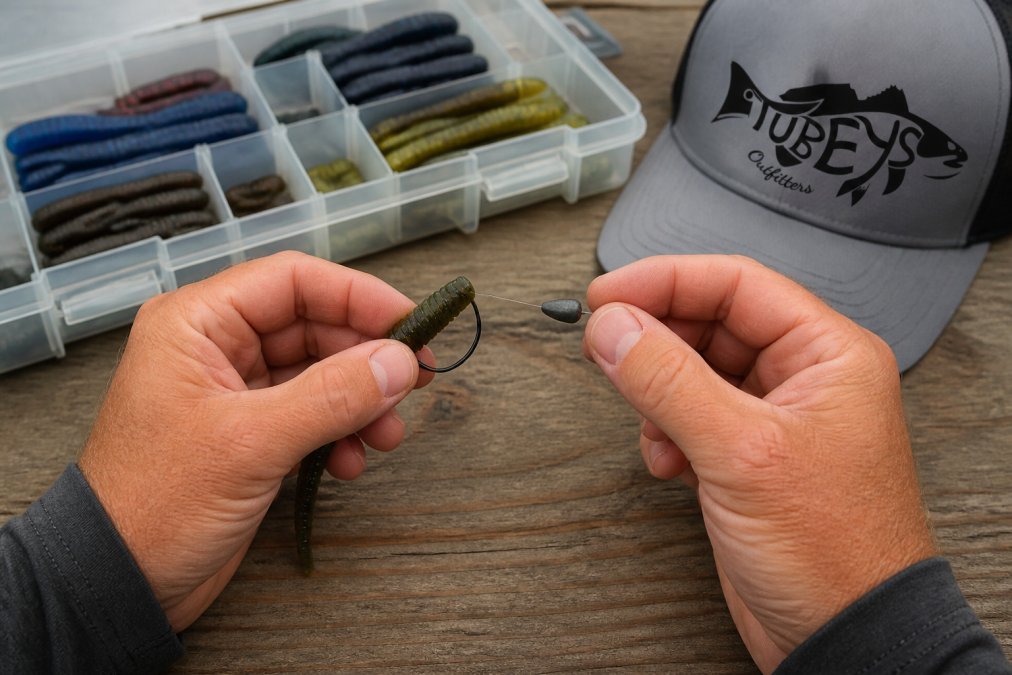
A Texas rig consists of a bullet weight, soft plastic worm, and wide-gap hook. The weight slides freely on the line above the hook, allowing the worm to fall naturally while the weight reaches bottom first. This separation lets the worm move independently and creates a more natural presentation.
Hook size matters. For 4-6 inch worms, use a 2/0 to 4/0 wide-gap hook.
Texas Rig Retrieve Techniques
Most beginners work the rig too fast. Slow is almost always better. Cast, allow the rig to fall on controlled slack line, then work the bottom with short, deliberate hops, lifting the rod tip 12-18 inches and letting the weight settle back down.
Soft Plastic Rigging Techniques for Lakes
Beyond the Texas rig, several other rigging methods solve specific problems. Each technique changes how the plastic moves, how deep it fishes, and what cover it can access.
Weedless vs. Weighted Presentations
Weedless rigging buries the hook point in the soft plastic, protecting it from vegetation. This setup is essential in thick cover but reduces hook-up percentage. Weighted weedless rigs (1/4 to 1/2 ounce) let you power through cover and reach deeper structure.
Drop-Shot and Carolina Rig Setups
The drop-shot rig suspends the soft plastic above the bottom, creating a vertical presentation deadly in deep water and around vertical structure. The weight hangs below the hook, and the plastic hangs above it. This setup lets you work a specific depth zone with precision.
Wacky Rig for Panfish and Finesse Situations
The wacky rig hooks a soft plastic through the middle of the body, creating a horizontal presentation that falls with a flutter. No weight is needed. This rig is devastatingly effective for panfish (crappie, bluegill) and finesse situations where fish are inactive. A wacky-rigged Senko in clear water is nearly unbeatable, mimicking a struggling baitfish with a natural presentation.
Best Soft Plastics for Redfish and Trout in Inshore Waters
Saltwater inshore fishing, particularly in shallow flats and lagoons like the Lower Laguna Madre, demands soft plastics engineered specifically for saltwater conditions. The fundamentals of soft plastic selection remain consistent with freshwater, match forage, adjust for water clarity, and modify retrieval speed, but execution differs significantly because saltwater fish operate in a different sensory environment.
Forage Matching and Profile Selection
In the Lower Laguna Madre, the dominant forage species dictate plastic selection. Mullet (both adult and juvenile), shrimp, silversides, and small baitfish comprise the primary diet of redfish and trout. A 4-5 inch mullet-pattern soft plastic rigged weightless or on a light 1/16 to 1/8 ounce jig head replicates natural prey redfish actively hunt in 1-3 feet of water over grass flats.
Water Clarity and Color Strategy
Water clarity in the Lower Laguna Madre varies dramatically with tide, wind, and recent rainfall. Clear-water days (visibility 3+ feet) demand natural colors: pearl, tan, brown, and translucent patterns that closely mimic actual baitfish. Redfish in clear water are highly visual and easily spooked by unnatural colors.
Scent and Sensory Triggers
Saltwater fish rely more heavily on scent and lateral-line detection than freshwater species. Redfish and trout possess highly developed olfactory systems and use scent to locate food, especially in stained water or low-light conditions. Shrimp scent is nearly universal in saltwater soft plastics and works across all conditions.
Rigging Differences: Saltwater vs. Freshwater
Saltwater inshore flats are typically shallow (1-4 feet), and excessive weight creates unnatural fall rates and disturbs fish in clear water. Use 1/16 to 1/8 ounce jig heads as your baseline in shallow flats. In deeper water (4-6 feet) or when fishing over dense grass, increase to 1/4 ounce.
Retrieval Techniques for Inshore Species
Saltwater retrieval differs significantly from freshwater power fishing. Redfish and trout in shallow flats respond better to slow, deliberate presentations than aggressive hopping. Cast ahead of moving fish or into productive structure and work the plastic with minimal rod movement. A steady, slow retrieve with occasional pauses mimics natural baitfish behavior and triggers strikes from hunting redfish.
Species-Specific Preferences
Redfish are aggressive hunters that respond to larger profiles and faster presentations than trout. A 4-5 inch mullet pattern on a 1/8 ounce jig head fished with a steady, moderate retrieve triggers strikes from redfish in most conditions. Redfish tolerate slightly brighter colors than trout and respond well to chartreuse-enhanced patterns in stained water.
Color Selection Based on Water Clarity and Season
Color is straightforward: match the visibility conditions and forage present in your water. Water clarity dictates visibility distance, which determines how visible your lure must be to attract strikes.
Green Pumpkin, Chartreuse, and Natural Patterns
Green pumpkin is the most versatile color in soft plastics. It works in clear water, stained water, and everything in between. In clear freshwater lakes, green pumpkin with minimal contrast works best. In stained water, add a chartreuse tail or belly to increase visibility.
UV-Enhanced and Scent-Infused Options
UV-enhanced plastics glow under ultraviolet light, creating an additional visibility trigger especially effective in stained water or low-light conditions. Many modern soft plastics incorporate UV dyes that activate in specific light wavelengths. The effect is subtle but measurable; fish in murky water detect UV-enhanced plastics from greater distances.
Water Temperature and Plastic Density: What Changes
Water temperature is the master variable controlling fish metabolism, forage activity, and soft plastic selection. As temperature changes, fish behavior shifts dramatically, and your lure choice must adjust accordingly.
The Temperature-Metabolism Connection
Cold water (below 50°F) slows fish metabolism significantly. A largemouth bass in 40°F water burns calories at roughly one-third the rate of a bass in 75°F water. This metabolic slowdown directly affects feeding behavior: fish won't chase fast-moving targets, won't hold soft plastics in their mouths as long before detecting the fake, and require presentations that minimize energy expenditure.
Plastic Density and Fall Rate Mechanics
Plastic density, the amount of air incorporated into the plastic formula during manufacturing, directly affects fall rate and buoyancy. Denser plastics fall faster and sink more readily. Less-dense plastics fall slower and maintain buoyancy longer.
Seasonal Plastic Selection Strategy
This principle applies equally to freshwater and saltwater. In the Lower Laguna Madre, winter water temperatures (50-60°F) slow redfish and trout metabolism significantly. A less-dense soft plastic falling slowly triggers strikes from lethargic fish. Summer water temperatures (80-85°F) activate aggressive feeding, and denser plastics falling quickly produce better results.
Water Clarity and Density Interaction
Water clarity interacts with plastic density in ways that affect presentation effectiveness. In clear water, slow-falling plastics allow fish to inspect lures carefully, which is advantageous when matching natural forage. In stained water, faster-falling plastics create vibration and movement that helps fish locate your lure from distance.
Practical Application: Temperature-Based Plastic Selection
Below 50°F (Winter): Use plastics that allow for the slowest possible fall rate. Rig weightless or with minimal weight (1/16 ounce). Retrieve slowly with extended pauses (5-10 seconds between movements). In the Lower Laguna Madre, winter redfish and trout respond to 2-3 inch profiles in natural colors fished with minimal movement.
Monitoring and Adjustment
Carry a simple water thermometer in your tackle box. Check water temperature every 30 minutes, particularly when fishing different areas or depths. Temperature changes of just 5-10°F significantly affect fish behavior and require presentation adjustments. If you're not getting strikes, check water temperature before changing plastics.
Target Species: Bass, Panfish, Pike, and Beyond
Different species respond to soft plastics in fundamentally different ways. Understanding species-specific preferences refines your approach and increases success rates.
Largemouth Bass Preferences and Seasonal Patterns
Largemouth bass are the primary target for soft plastics in freshwater. In spring (water temp 50-65°F), bass move shallow to spawn. Slow presentations around shallow cover produce best results. Summer bass (water temp 70-85°F) move deeper and relate to structure. Fall (water temp 55-70°F) mirrors spring as bass move shallow again, feeding aggressively to prepare for winter.
Crappie and Panfish Finesse Tactics
Crappie and panfish respond to smaller soft plastics and finesse presentations. A 2-3 inch worm or grub on a light jig head is ideal. Wacky rigs are devastatingly effective for crappie, especially around spawning season. Panfish (bluegill, sunfish) respond aggressively to small soft plastics in spring and early summer using 1-2 inch plastics on 1/0 to 2/0 hooks.
Pike and Musky with Larger Profiles
Pike and musky require larger soft plastics and heavier presentations. A 5-7 inch soft swimbait or creature bait triggers strikes from these aggressive predators. Pike respond to faster retrieves and more aggressive presentations than bass. Rig pike plastics on heavy jig heads (1/2 to 1 ounce) or use weighted Texas rigs with substantial weights.
Seasonal Fishing Strategies and Retrieve Speed
Seasonal changes dictate not just which plastics to use but how to retrieve them. Understanding seasonal patterns and adjusting retrieve speed accordingly separates successful anglers from frustrated ones.
Spring and Fall Power Fishing
Spring and fall are power fishing seasons. Water temperatures are moderate (55-70°F), fish are active, and feeding periods are extended. Bass and other species respond aggressively to faster presentations. Use swimbaits and grubs with active tail motion. Increase retrieve speed and don't pause excessively.
Summer and Winter Finesse Adjustments
Summer requires a shift to finesse presentations. Slower retrieves, longer pauses, and lighter presentations work best. Fish are less aggressive due to warm water and reduced oxygen levels. Work deeper water during midday, shallower water early and late. Reduce retrieve speed by 50% compared to spring and fall.
Soft Plastic Modifications and Hybrid Options
Advanced anglers customize soft plastics to match specific conditions. Trimming tails changes action and fall rate. A shorter tail reduces vibration and fall speed, useful for finesse situations. A longer tail increases action and fall speed, useful for power fishing.
Environmental Impact and Biodegradable Alternatives
Soft plastic fishing lures create environmental concerns. Traditional plastics persist in aquatic ecosystems indefinitely, potentially harming wildlife. Biodegradable soft plastics break down naturally, reducing long-term environmental impact. These alternatives are increasingly available and perform similarly to traditional plastics in most applications.
Troubleshooting Common Rigging Failures
Even experienced anglers encounter rigging problems. Missed strikes often result from improper hook gap or insufficient hook penetration. Verify your hook size matches your plastic profile. If you're missing strikes consistently, try a larger hook or switch to a non-weedless presentation that exposes the hook point fully.
Rigging Method | Best For | Water Depth | Hook Exposure |
|---|---|---|---|
Texas Rig | All-purpose, cover fishing | Shallow to medium | Weedless option |
Drop-Shot | Vertical presentations, suspended fish | Medium to deep | Exposed hook |
Carolina Rig | Covering distance, sandy bottoms | Deep | Exposed hook |
Wacky Rig | Finesse, panfish, clear water | Shallow to medium | Exposed hook |
Weedless Rig | Dense vegetation, heavy cover | All depths | Buried point |
External Sources
According to Texas Parks and Wildlife Department guidelines on freshwater fishing, proper soft plastic selection and rigging technique significantly improve catch rates across species.
Frequently Asked Questions
What is the best soft plastic color for murky freshwater lakes?
In low-clarity water, chartreuse and dark green pumpkin soft plastics produce strong vibration signatures that fish detect through lateral line sensing. UV-enhanced plastics also stand out in stained water. Bright colors create silhouettes that bass and pike can track even when visibility drops below 2 feet. Test combinations of these colors in your local water to find what triggers strikes in your specific conditions.
How do I choose between Texas rig and drop-shot rigging for soft plastics?
Texas rig works best for power fishing shallow structure, vegetation, and rocky areas where you need a weedless presentation. Drop-shot excels in deeper water (8-20 feet), around docks, and when targeting pressured fish that respond to subtle, slow presentations. Texas rig covers water faster; drop-shot keeps the bait suspended at precise depths. Choose based on your target depth and fishing pace.
Are soft plastics effective for both freshwater lakes and saltwater inshore fishing?
Yes. Soft plastics work exceptionally well in both environments. In freshwater lakes, they mimic crawfish, shad, and baitfish for bass and panfish. In inshore saltwater, the same soft plastic shapes attract redfish and trout when rigged weedless or on a drop-shot. The key difference is matching color and size to local forage—green pumpkin for murky freshwater, natural shad patterns for clear coastal flats.
What size soft plastic should I use in clear versus stained water?
In clear water (3+ feet visibility), use smaller soft plastics (2-3 inches) to match natural baitfish and crawfish more closely. Finesse worms and small swimbaits trigger cautious fish. In stained water (1-2 feet visibility), upsize to 4-6 inch plastics that create stronger vibration and displacement. Larger profiles are easier for fish to locate when sight-feeding becomes secondary to lateral line detection.
How does water temperature affect which soft plastic density I should choose?
Cold water (below 50°F) slows fish metabolism, so use buoyant, slow-sinking plastics that stay in the strike zone longer. Weightless presentations and light Texas rigs work well. Warm water (above 70°F) activates fish, so denser plastics that fall faster and allow quicker retrieves are effective. Spring and fall transitions require experimenting with medium-density plastics as fish adjust to changing conditions.
What are the most versatile soft plastic shapes for both lakes and inshore waters?
Soft swimbaits and grubs rank highest for versatility across freshwater lakes and saltwater inshore flats. These shapes imitate natural forage in both environments—shiners and shad in lakes, mullet and silversides on the coast. Senkos also work in both settings for finesse presentations. Paddle-tail swimbaits excel when you need strong tail action to trigger aggressive strikes in either system.