 listicle
Fishing Gear Designed to Put More Fish in the Boat
Table of Contents
- Why Simplified Fishing Gear Designed to Put More Fish in the Boat Actually Works
- Essential Rod Holders and Marine-Grade Storage Solutions
- Soft Plastic Lures for Redfish and Inshore Species
- How to Organize a Fishing Boat for Efficiency
- Sonar and Fish Finder Integration for Real-Time Targeting
- Inshore Fishing Tackle Management Systems
- Trolling Motor Upgrades and Anchoring Systems
- Ergonomics and Comfort for Long-Duration Fishing Sessions
- Budget-Friendly DIY Organization Hacks That Work
- Frequently Asked Questions
Last Updated: October 2, 2026
Why Simplified Fishing Gear Designed to Put More Fish in the Boat Actually Works
Fishing gear designed put more fish in the boat doesn't need to be complicated. The best anglers understand that simplicity and precision work together. When your equipment is organized, accessible, and matched to your target species, you spend less time fumbling and more time fishing.
At Tubey's Outfitters, we've built our entire product line around this principle. Whether you're chasing redfish and trout in the Lower Laguna Madre or bass in freshwater lakes, the difference between a productive day and a frustrating one often comes down to how your gear is set up. A well-designed fishing boat setup eliminates wasted motion, reduces line tangles, and keeps your best lures within arm's reach when fish are actively feeding.
This guide covers the core systems that separate effective anglers from those who struggle: rod holder configurations, tackle organization, sonar integration, and ergonomic considerations that actually improve your catch rate.
Essential Rod Holders and Marine-Grade Storage Solutions
Rod holders are the foundation of boat organization. They keep your rods secure, prevent tangling, and let you work multiple lines simultaneously. The best marine-grade rod holders mount securely without drilling through your hull, protecting your boat's integrity while staying accessible during active fishing.
Vertical rod holders work well for trolling and open-water fishing. Horizontal holders keep rods organized when anchored or drifting. Mix both: position vertical holders along the gunwales for quick-draw access to your most-used rods, and place horizontal storage behind the console for backup gear.
Marine-grade materials matter. Stainless steel resists saltwater corrosion better than aluminum. Rubber-lined cups protect your rod finish and prevent slipping. Non-drilling mounts eliminate the risk of water intrusion, critical for inshore boats working shallow flats where even small leaks become big problems.
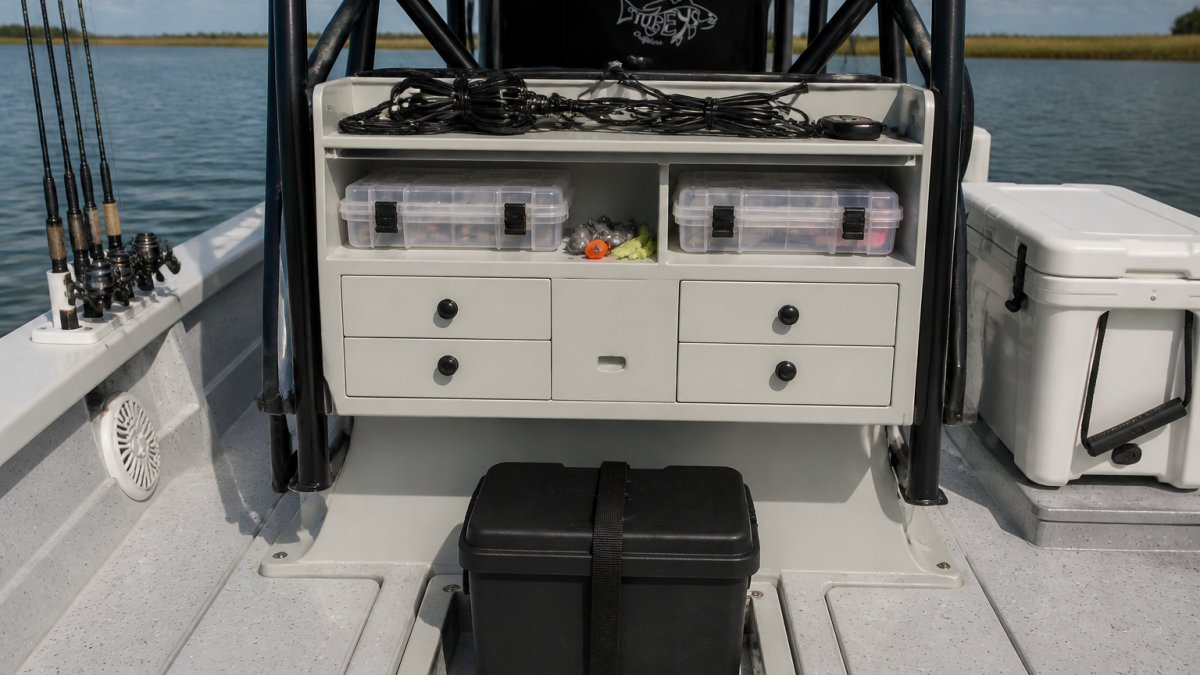
Storage solutions need to be waterproof and organized by function. Soft plastic lures, hooks, weights, and line should be grouped logically. Clear-sided tackle boxes let you see contents without opening them. In saltwater environments, rinse all metal components with fresh water after each trip to extend gear life by months.
Tubey's Outfitters designs custom rods.
Soft Plastic Lures for Redfish and Inshore Species
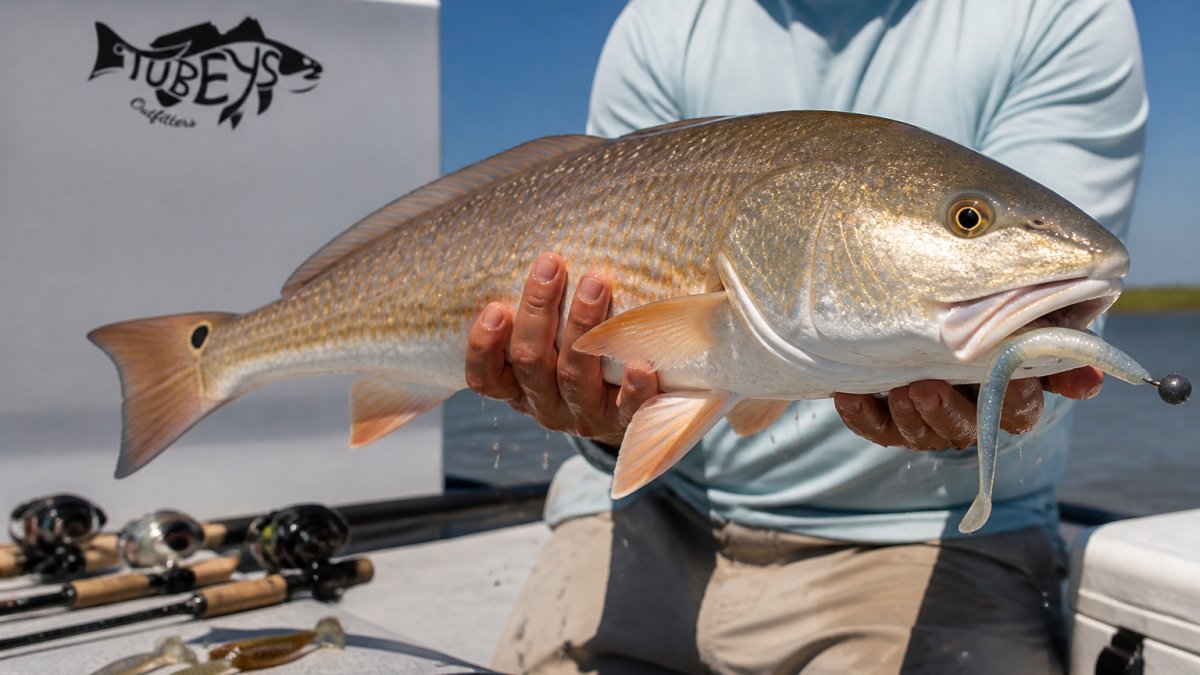
Soft plastic lures work because they mimic natural prey and feel realistic in a fish's mouth. Redfish, trout, and snapper respond aggressively to well-designed soft plastics with the right action, color, and weight distribution.
In clear water, natural colors, pearl, shad, and bone, outperform bright hues. Murky water calls for darker colors with contrast: black and chartreuse, or dark red. For the Lower Laguna Madre's variable conditions, keep three color families on hand: naturals for clear days, dark-and-bright combinations for stained water, and solid blacks for low-light periods.
Action matters as much as appearance. A soft plastic with a paddle tail generates vibration that attracts fish from distance. A thin, flexible tail creates subtle movement that triggers bites in clear water. Tubey's Outfitters soft plastics are poured with proven action profiles tested in both saltwater flats and freshwater lakes. The material is durable enough to handle multiple fish before tearing, reducing cost per catch.
Rigging simplicity saves time. Straight-shank jig heads with integrated hook slots let you rig lures in seconds. Texas-rigged plastics work in heavy cover. Weightless rigging lets lures fall naturally and stay in the strike zone longer. Carry rigging options for each lure style so you can adapt to conditions without returning to the dock.
How to Organize a Fishing Boat for Efficiency
Organization separates productive fishing from wasted time. Efficiency isn't just about accessibility, it's about how weight distribution affects boat performance, fuel consumption, and your ability to fish shallow water effectively. Start by mapping your boat's layout and assigning zones: tackle storage, rod holders, sonar display, and safety gear.
Tackle and Gear Placement for Access
Tackle boxes belong near your primary fishing position. If you're right-handed, place them to your right. If you fish standing, mount boxes at waist height to avoid repeated bending. Soft plastic lures should be separated by size and color family. In saltwater environments, rinse all metal hardware with fresh water daily to prevent corrosion.
Rod holders should follow your casting patterns. Place your most-used rods in the quickest-access positions. Secondary rods go in less convenient spots, forcing you to use your best gear first, which improves your odds.
Safety gear must be immediately accessible but not in your way during active fishing. Mount life vests, first aid, and fire extinguishers forward or above your primary fishing zone. In saltwater environments, use stainless steel mounting hardware to resist corrosion.
Cable Management and Deck Safety
Cable management prevents tangles, catches, and tripping hazards. Sonar cables, trolling motor wires, and power lines should be bundled and routed away from foot traffic. Use clips and cable ties to keep wires organized. In saltwater boats, check cable routing monthly, salt spray accelerates corrosion of exposed connectors.
Weight Distribution and Boat Performance
Weight distribution directly affects how your boat handles, planes, and consumes fuel. A boat that sits nose-down planes slower, requires more throttle to reach cruising speed, and burns significantly more fuel.
Heavy tackle boxes and batteries should be centered or slightly aft to maintain proper trim. Generally:
- Batteries and heavy gear should be mounted in the center or aft of the boat's waterline to keep the bow up and let the boat plane efficiently.
- Sonar equipment should be mounted on the console, balanced by positioning heavier items aft.
- Fuel tanks are usually fixed, but if you have auxiliary tanks, fill them strategically to maintain trim when fishing solo.
- Anglers and crew should position themselves near the center during transit. When fishing, your position matters less because the boat is stationary or moving slowly.
A properly trimmed boat in shallow water (2-6 feet, typical for Lower Laguna Madre redfish and trout fishing) handles more responsively and draws less water, letting you access shallower flats without running aground. An improperly weighted boat may draw 6 inches more water, eliminating access to productive shallow zones.
Test your boat's trim by loading your typical fishing gear, running at cruising speed, and noting fuel consumption. Shift weight aft and compare fuel burn. Most anglers find that optimizing weight distribution improves fuel economy by 10-15%, translating to 1-2 extra hours of fishing range per tank.
Deck Layout and Movement Efficiency
Your boat's deck layout should minimize unnecessary movement. Position your sonar display where you can see it while fishing, typically on the console or a side-mounted arm. The display should be shaded from direct sunlight so you can read it in bright conditions. Protect the screen from saltwater spray with a hood or cover.
If you're fishing from a poling platform, your tackle should be accessible from that position without climbing down. Mount a small tackle box on the platform itself. For boat-side fishing, position tackle boxes along the side nearest your casting position, eliminating the need to turn or walk to access lures.
Mount the sonar display on an articulating arm if possible. This lets you adjust the angle for sun glare and move it out of the way when not actively using sonar. Protect all electronics from saltwater spray, corrosion of connectors and circuit boards is the leading cause of fish finder failure in saltwater boats.
Sonar and Fish Finder Integration for Real-Time Targeting
Fish finders eliminate guesswork. Real-time sonar shows structure, depth changes, and fish location. For inshore work in the Lower Laguna Madre, a quality fish finder reveals the shallow flats, channels, and drop-offs where redfish and trout concentrate.
The Garmin LiveScope 2 HD provides live-scanning sonar that shows fish movement as it happens. You watch fish approach your lure and see why they strike or refuse. This feedback accelerates your learning curve. You adjust color, action, or retrieve speed based on what you see, not what you guess.
Mount your sonar display where you can see it while fishing, typically the console or a side-mounted arm. The display should be shaded from direct sunlight. Protect the screen from saltwater spray with a hood or cover.
Sonar helps you identify productive zones quickly. Instead of blind casting, you locate structure, depth transitions, and suspended fish. This efficiency means more time fishing in the right spots and less time searching empty water. Integrate sonar with your tackle selection: if sonar shows fish suspended 8 feet deep, use a weighted soft plastic that reaches that depth. Real-time feedback lets you match your approach to what fish are actually doing.
Inshore Fishing Tackle Management Systems
Tackle management systems organize your lures, hooks, weights, and lines so you find what you need instantly. A poor system wastes 20-30 minutes per fishing trip searching for the right lure. A good system keeps you casting.
Soft plastic storage boxes should be labeled by species and size. Separate redfish lures from bass lures. Within each category, organize by size: 2-inch, 3-inch, 4-inch. This structure lets you grab the right lure without thinking.
Hook organization matters. Keep saltwater-grade hooks separate from freshwater hooks. Stainless steel hooks resist corrosion better than carbon steel. For inshore work, use circle hooks or offset shank hooks that match your soft plastic style. Organize hooks by size and type in compartmented boxes.
Weight systems should include jig heads, bullet weights, and split shot. Jig heads come in various weights (1/8 ounce to 1 ounce). Keep the most useful weights readily accessible. Heavier weights for deeper water or strong current should be stored separately from lighter options you use daily.
Line organization prevents tangles. Keep fresh spools of your primary line weight (10-pound, 15-pound, 20-pound) in a dry box. Replace line every 50-75 hours of fishing to maintain strength and avoid break-offs during critical moments. In saltwater, line degrades faster due to salt exposure and UV damage.
Tubey's Outfitters designs tackle boxes.
Trolling Motor Upgrades and Anchoring Systems
Trolling motors give you precise boat control in shallow water without spooking fish. A quality trolling motor with variable speed lets you hold position in current, creep along structure, and position yourself for the perfect cast. In the Lower Laguna Madre, where depths range from 2 to 8 feet, a trolling motor is essential for serious fishing.
Foot controls free your hands for casting and rod management. Hand controls work too, but foot controls let you adjust position without looking down. This matters when you're focused on a strike zone or following a school of fish.
Battery capacity determines how long you can fish. A 24-volt system provides more power and longer runtime than 12-volt. Dual batteries with an isolator switch let you run your trolling motor independently from your main engine, preventing dead batteries and keeping you mobile throughout the day.
Anchoring systems hold you in position when wind or current would otherwise push you away from structure. A Power-Pole shallow water anchor deploys silently and holds instantly, critical for inshore flats where spooking fish means losing an opportunity. Wireless remote control lets you adjust anchor position without returning to the console.
Combination systems, trolling motor plus shallow water anchor, give you maximum flexibility. Use the trolling motor to approach structure quietly. Deploy the anchor when you've located fish. This two-stage approach reduces noise and maximizes productive fishing time.
Ergonomics and Comfort for Long-Duration Fishing Sessions
Long fishing days demand comfortable positioning, but ergonomics matter more than comfort alone, they directly affect casting accuracy, strike detection, and catch rate. Poor ergonomics lead to fatigue-induced mistakes: missed strikes, reduced casting distance, slower lure changes, and premature trips back to the dock.
Casting Position and Shoulder Mechanics
Rod holder height determines whether you cast from a mechanically efficient position or fight gravity with every cast. Your rod should be positioned so your elbow stays at roughly 90 degrees during the casting stroke, with your shoulder relaxed. If rod holders are too low, you'll raise your shoulders to compensate, causing rotator cuff fatigue within 2-3 hours.
Test your rod holder height by standing in your normal casting position. Your hands should be at chest height at the start of the cast. Adjust vertical rod holders until this feels natural.
Foot Position and Deck Fatigue
Your feet support your entire casting power and balance on a moving boat. Standing on a wet, slippery deck in saltwater conditions causes constant micro-adjustments that exhaust your legs and lower back. Non-slip deck mats reduce this fatigue significantly. Position mats in your primary casting zone and anywhere you stand while managing tackle.
If you fish standing, your feet should be shoulder-width apart with knees slightly bent. This stance distributes weight evenly and lets you absorb boat movement without losing balance. A footrest or raised platform in your primary fishing position lets you shift weight periodically, reducing leg fatigue.
Tackle Box Positioning and Spinal Load
Reaching repeatedly to waist-level tackle boxes strains your lower back. Most anglers fish more efficiently when tackle is positioned at mid-chest height, roughly where your hands naturally rest. This reduces bending and keeps your core engaged during the fishing session.
For inshore work, position your primary soft plastic box directly to your dominant side at chest height. Secondary boxes can be lower or farther away. This forces you to use your best lures first, which improves your odds while keeping your most-accessed gear ergonomically positioned.
Shade and Visual Fatigue
Sun exposure causes eye strain and reduces your ability to detect strikes. A T-top or Bimini shade lets you fish comfortably in bright conditions without squinting. Reduced glare helps you see your lure's action, spot strikes, and read your sonar display clearly. In saltwater flats fishing, where you're often looking at shallow water and trying to spot tailing redfish or cruising trout, shade becomes a performance tool.
Wear polarized sunglasses to cut water glare further. This reduces eye fatigue and lets you see subsurface structure and fish movement more clearly. The combination of shade and polarized lenses extends your effective fishing window into midday hours.
Hydration and Mental Clarity
Dehydration reduces casting accuracy and decision-making speed. Keep fresh water in a cooler within arm's reach. Sip regularly, not just when you're thirsty. A hydrated angler maintains focus on sonar, lure selection, and strike detection for the full day.
Transition Movements and Repetitive Strain
Inshore saltwater fishing involves frequent transitions: casting, retrieving, setting the hook, landing fish, changing lures, adjusting position. Each transition compounds over 8-10 hours. Minimize unnecessary motion by organizing your boat so transitions are smooth. Your casting position should be close to your tackle box, sonar display, and rod holders.
If you're fishing in current or wind (common in the Lower Laguna Madre), your stabilizing muscles work harder to maintain balance. Good deck mats and a stable platform reduce this load. A properly balanced boat also moves more predictably, reducing the muscular effort required to stay stable during casts.
Budget-Friendly DIY Organization Hacks That Work
Professional boat setups cost money, but effective organization doesn't require expensive gear. Simple DIY solutions deliver results if you think through your workflow.
PVC pipe makes excellent rod holders. Cut 2-inch PVC to length, add rubber-lined end caps, and mount vertically or horizontally along your gunwales. This approach works for freshwater and light saltwater use. For heavy saltwater, stainless steel is worth the investment, but PVC works for testing layouts before committing to permanent installations.
Clear plastic storage containers organized by species and size replace expensive tackle boxes. Label containers with waterproof tape. Stack them in a specific order so you find what you need without opening everything. This system costs a fraction of integrated tackle management systems but requires discipline to maintain.
Carabiners and paracord secure soft plastic lures to your boat without drilling. Loop paracord through your boat's existing hardware, attach carabiners, and clip lure bags directly to the line. This works for temporary setups or backup gear.
Magnetic strips mounted on your console hold metal hooks and weights. Stainless steel magnets resist saltwater corrosion better than standard magnets.
Coolers serve double duty as tackle storage and beverage holders. Organize soft plastics in the top compartment, keep ice and water below. This saves space and keeps your lures cool, extending their lifespan in hot weather.
Old fishing rod cases store backup rods and protect them from damage. Lay them horizontally under your console or along the gunwale. Label each case so you know what's inside without opening it.
Cable clips and velcro straps organize sonar and trolling motor cables. This prevents tangling and makes troubleshooting easier if something fails mid-trip. It also reduces tripping hazards.
The key to DIY organization is testing before you commit. Try temporary solutions for a few trips. Once you confirm a layout works, invest in permanent upgrades. This approach saves money and prevents expensive mistakes.
Building a fishing boat setup with fishing gear designed put more fish in the boat starts with organization and accessibility. The systems covered here, rod holders, tackle management, sonar integration, and ergonomic positioning, compound to improve your catch rate significantly. Tubey's Outfitters custom rods and soft plastics are engineered to work within these systems, with features like integrated mounting points and proven action profiles that deliver results in both saltwater flats and freshwater lakes. Start with the fundamentals, test your layout, and upgrade incrementally. The best setup is one you'll actually use. Get started with Tubey's Outfitters fishing gear and build a simplified system that works for your water and target species.
Frequently Asked Questions
What makes fishing gear designed to put more fish in the boat different from standard tackle?
Gear designed specifically to increase catch rates combines three elements: ergonomic positioning that reduces fatigue during long sessions, organized storage that keeps your most effective lures and rigs instantly accessible, and equipment tested in real fishing conditions. Simplified systems eliminate decision fatigue—you spend less time searching for the right tool and more time fishing. The difference shows up in your cooler.
How do I choose the best soft plastic lures for redfish in inshore waters?
Redfish respond to soft plastics that mimic natural prey: mullet patterns in 3- to 4-inch sizes for sight-casting on flats, and shrimp imitations for deeper structure. Color matters by water clarity—natural browns and tans in clear water, chartreuse and white in stained conditions. The key is matching the forage in your local water and testing multiple patterns to see what produces consistent strikes in your fishing grounds.
Can simplified fishing gear work for both saltwater and freshwater fishing?
Yes, but with one critical difference: saltwater requires marine-grade components that resist corrosion. Rod holders, storage boxes, and hardware must be stainless steel or coated for inshore use. Freshwater gear doesn't face the same salt exposure. A well-designed boat setup uses marine-grade storage for everything, making it safe for both environments. Your lures and rigs can transition between freshwater and saltwater, but your boat hardware cannot.
How does boat organization actually impact my catch rate?
Organization directly affects catch rate through three mechanisms: reduced setup time means you fish more hours per trip, instant access to proven lures keeps you using what works instead of experimenting, and proper weight distribution improves boat handling in rough water. Anglers who organize their boats report 15-30% more productive fishing time per outing simply because they're not searching for gear or dealing with tangled rigging.