 Listicle
5 Best Soft Plastic Colors for Murky Water
Table of Contents
- Why Soft Plastic Color Matters in Murky Water
- The 5 Best Soft Plastic Colors for Murky Water
- Best Soft Plastics for Redfish in Stained Inshore Water
- How to Fish Murky Water for Bass: Color Strategy and Presentation
- Scent vs. Color in Murky Water: What Actually Triggers Strikes
- Water Temperature and Seasonal Color Adjustments
- Common Mistakes When Choosing Soft Plastic Colors for Dirty Water
- Frequently Asked Questions
Last Updated: October 4, 2026
Why Soft Plastic Color Matters in Murky Water
When water clarity drops, fish lose their ability to see fine details. They rely on silhouette, contrast, and vibration to locate prey. Choosing the right soft plastic color for murky water isn't about aesthetics, it's about visibility through a filter of mud, tannins, and suspended particles. At Tubey's Outfitters, we've tested soft plastics across freshwater lakes and saltwater inshore environments, and the same principle holds true whether you're chasing bass in stained lakes or redfish in the Lower Laguna Madre: color selection directly impacts your strike rate.
The challenge intensifies in dirty water. Light penetration drops dramatically. What works in clear conditions fails in murky conditions. A lure that's invisible at 10 feet in clear water might be completely undetectable in stained water. This is where understanding light penetration, water turbidity, and fish sensory systems becomes practical knowledge that puts more fish in the boat.
How Light Penetration Changes Fish Behavior
Light penetration in murky water operates on physics, not preference. When water contains suspended sediment, algae, or tannins, the light spectrum shifts. Red wavelengths disappear first, typically within 5-10 feet of depth. Orange and yellow follow. Blue and green penetrate deeper. Ultraviolet light scatters and fades quickly.
Fish adapt their hunting behavior to this reduced visibility. Their lateral line system, a sensory organ that detects vibration and pressure changes, becomes more important than sight. In clear water, bass hunt primarily by vision. In murky water, they shift toward lateral line detection and chemoreception (smell). This shift changes which colors trigger strikes.
A bright chartreuse lure that seems garish in clear water becomes highly visible in stained water because yellow-green wavelengths penetrate better than most colors. Black creates a strong silhouette against whatever ambient light exists. This is why high-contrast combinations dominate murky water fishing.
Silhouette vs. Color: Which Wins in Stained Water
Here's what most guides miss: silhouette matters more than color in truly dirty water. When visibility drops below 2 feet, fish can't distinguish fine color details. They see shape and contrast. A black lure against a light background (or vice versa) creates the visual signal that triggers predatory instinct.
This doesn't mean color is irrelevant. Color still matters because it affects how that silhouette stands out. A black lure against murky brown water blends in. A black lure with a bright chartreuse or white stripe creates contrast that pops. The combination of silhouette and strategic color accents outperforms either approach alone.
For saltwater inshore fishing, redfish and trout in stained coastal water, this principle is critical. The Lower Laguna Madre experiences significant water clarity variation depending on season, wind, and tidal movement. When the water turns chocolate brown after a storm, silhouette dominates. When clarity improves to 3-4 feet, color begins to matter more.
The 5 Best Soft Plastic Colors for Murky Water
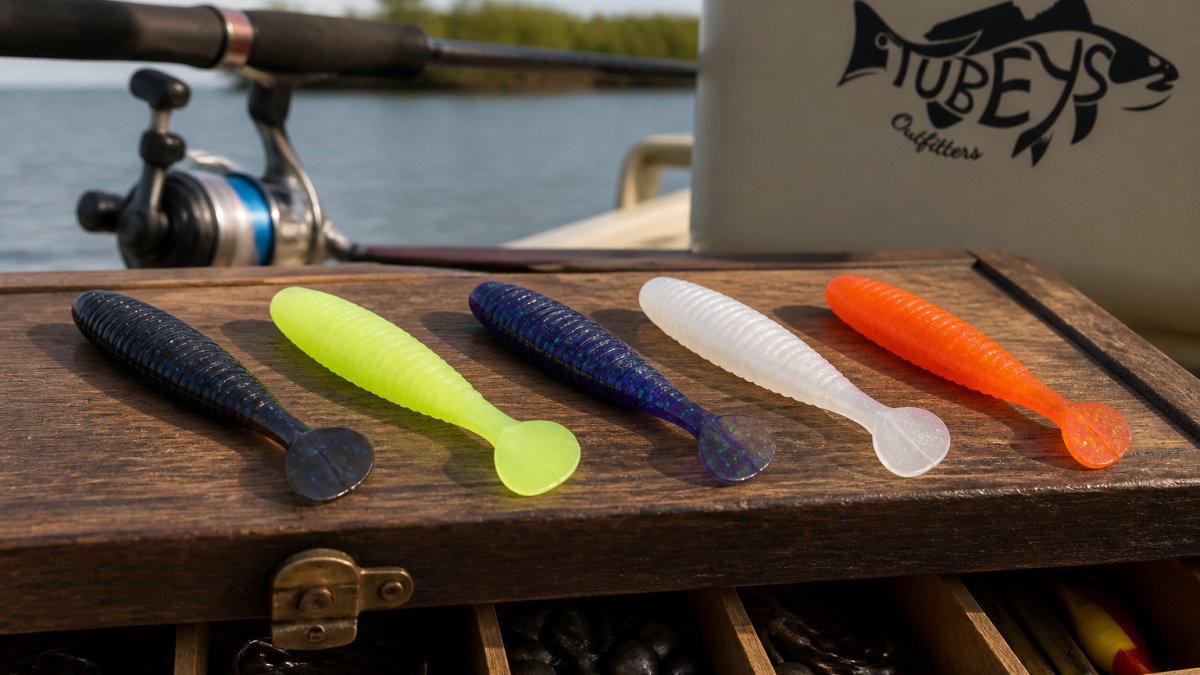
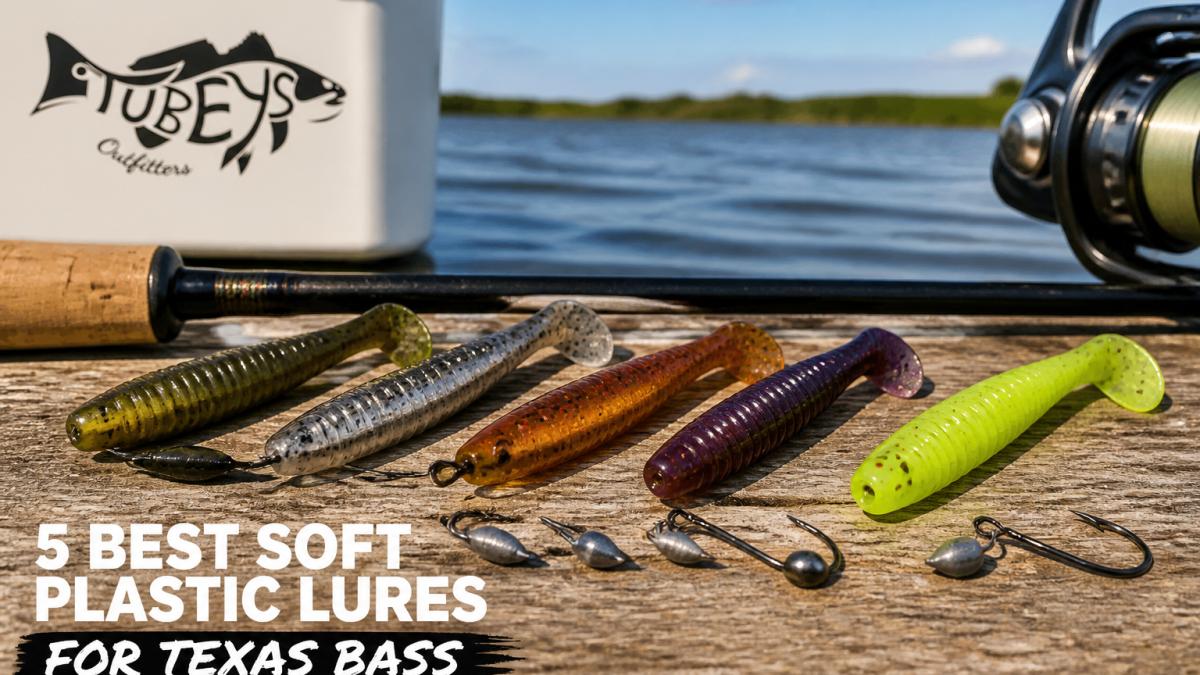
1. Black and Blue: The High-Contrast Silhouette
Black and blue soft plastics create the strongest silhouette in murky water. The combination works because black provides a solid dark outline while blue adds a secondary color that still maintains contrast without adding complexity. This color pairing dominates in both freshwater and saltwater applications.
In muddy water, a black and blue soft plastic is visible at distances where other colors fade to nothing. The contrast between the two colors helps fish locate the lure even when overall visibility is poor. For flipping and pitching into heavy cover, this combination triggers aggressive strikes from bass that can't see fine details but respond to shape and movement.
For redfish in the Lower Laguna Madre, black and blue works especially well in winter months when water clarity often drops. Redfish rely heavily on lateral line detection in these conditions, and the vibration profile of a black and blue bait combined with its silhouette creates a strong hunting trigger. Pair this color with a creature bait or craw profile for maximum effect.
2. Chartreuse: Maximum Visibility and Reaction Strikes
Chartreuse (bright yellow-green) penetrates murky water better than nearly any other color because yellow-green wavelengths scatter less in suspended sediment. This high-visibility soft plastic color triggers reaction strikes from fish that spot movement from distance.
Chartreuse works best when water clarity is slightly better than chocolate brown, roughly 1-3 feet of visibility. In these conditions, chartreuse stands out without looking unnatural. The color is bright enough to be seen but not so artificial that cautious fish reject it. Many anglers reserve chartreuse for low-light conditions or heavily stained water where maximum visibility matters.
For bass fishing in stained freshwater lakes, a chartreuse soft plastic produces consistent results. For saltwater applications in the Lower Laguna Madre, chartreuse works well for trout when water clarity improves slightly after a storm. The color's visibility makes it especially effective for reaction presentations, fast retrieves that trigger strikes from aggressive fish.
3. Junebug: Vibration and Dark Profile Combined
Junebug (dark purple-brown) combines a dark silhouette with subtle color variation that appeals to fish in very murky conditions. The color gets its name from its resemblance to June bugs, but what matters is the profile: dark enough to create silhouette, with enough complexity to trigger predatory response.
Junebug soft plastics often feature a ribbed or creature body design that displaces water and creates vibration. This combination of dark color and strong action makes junebug effective in the dirtiest water conditions. Fish detect the vibration first, then respond to the dark silhouette as they close distance.
In the Lower Laguna Madre, junebug works particularly well for redfish in extremely stained water. The color profile is natural enough to appeal to predatory fish while the body design creates the water displacement that triggers strikes. Junebug remains effective across freshwater and saltwater applications, making it a reliable choice for anglers who fish multiple environments.
4. Pearl White: Flash and Light Reflection
Pearl white soft plastics reflect available light, creating flash that attracts fish from distance. The reflective quality of pearl white works differently than the visibility of chartreuse, instead of penetrating the water column with bright color, pearl white bounces light back toward the fish's eyes.
Pearl white is most effective in conditions where some light penetration exists, roughly 2-4 feet of visibility. In extremely murky water (less than 1 foot), pearl white loses its advantage because insufficient light reflects off the lure. In clearer water, pearl white becomes a standard choice because the flash mimics natural baitfish.
For swimbait applications in stained water, pearl white creates the illusion of a fleeing baitfish. The flash triggers predatory instinct. In saltwater inshore environments, pearl white works well for trout when water clarity improves slightly. The color is less effective for redfish in extremely dirty water but becomes a solid choice as conditions clear.
5. Fire Orange: Contrast and Aggressive Action
Fire orange (bright reddish-orange) creates stark contrast in murky water while conveying aggression. The color stands out without the yellow-green penetration of chartreuse, instead relying on pure contrast to catch a fish's attention. Fire orange works best paired with aggressive lure action.
Fire orange soft plastics, particularly craw imitations with high-action tail designs, trigger strikes from bass and redfish that respond to bold visual stimuli. The color signals movement and feeding activity. Combined with a vibrating or fluttering tail, fire orange becomes highly effective in stained water conditions.
For freshwater bass in muddy water, fire orange craw baits produce aggressive strikes when retrieved with speed. For saltwater redfish in the Lower Laguna Madre, fire orange works well in winter when water is stained and redfish are feeding. The color's boldness appeals to predatory instinct without requiring perfect visibility.
Best Soft Plastics for Redfish in Stained Inshore Water
Redfish in the Lower Laguna Madre and other coastal systems face the same visibility challenges as freshwater bass. When water clarity drops below 2 feet, redfish shift toward lateral line detection and rely on vibration to locate prey. The best soft plastics for redfish in stained inshore water combine strong silhouette with either vibration or flash.
Black and blue soft plastics remain the top choice for redfish in extremely dirty water. The high-contrast silhouette appeals to redfish hunting behavior, and the color pairing is natural enough to avoid triggering wariness. Pair black and blue with a craw or creature body for maximum vibration.
Chartreuse and fire orange work well when water clarity improves slightly. Both colors create visibility without appearing artificial to redfish. Junebug remains effective across all clarity levels, making it a reliable backup choice when other colors underperform.
Tubey's Outfitters custom soft plastics are engineered specifically for coastal redfish and trout in stained water. Our proven color patterns, tested in the Lower Laguna Madre and other inshore environments, deliver consistent results across varying water clarity conditions. The strong action tails create vibration that redfish detect and respond to, while the color profiles remain visible in murky conditions.
How to Fish Murky Water for Bass: Color Strategy and Presentation
Color selection is only half the equation. Presentation technique determines whether fish actually strike. In murky water, bass can't see your lure from as far away, so you must fish tighter to cover and use slower presentations that give fish time to locate the bait.
Start with high-contrast colors, black and blue, junebug, or fire orange. Cast close to cover: fallen trees, vegetation, rocks, or dock pilings. Bass in murky water hunt near structure because visibility is already limited; they don't waste energy searching open water.
Work your soft plastic slowly. In clear water, a fast retrieve generates visibility. In murky water, speed works against you. A slow, deliberate presentation gives fish time to detect the lure through their lateral line and hone in visually. Pause occasionally. Let the lure sit. These pauses allow fish to locate prey that appears to be stationary or injured.
For saltwater bass fishing (redfish and trout in the Lower Laguna Madre), the same principle applies. Fish tight to structure. Work slowly. Use colors that create contrast. Redfish in stained water respond to this approach consistently.
Scent vs. Color in Murky Water: What Actually Triggers Strikes
In murky water, fish don't choose between scent and color; they use both in a specific sequence, but vibration is the missing link that most guides overlook. The actual trigger sequence is: (1) lateral line detects vibration, (2) eyes detect silhouette and color, (3) nose confirms scent, (4) mouth confirms taste. Skipping any step reduces strike probability.
When a fish's lateral line detects vibration, the tail flutter of a creature bait, the wobble of a paddle-tail swimbait, or the vibration of a ribbed body, the fish orients toward the source. This is detection, not commitment. As the fish approaches, its eyes process silhouette and color. In murky water, this visual confirmation is weak; the fish sees shape and contrast, not fine detail. But if the color creates sufficient contrast (black against brown water, chartreuse against dark water), the fish commits to investigation. As the fish closes to within inches, scent becomes decisive. A soft plastic without scent appeal might trigger a strike from an aggressive fish, but scent dramatically increases conversion rate. Fish that hesitate become committed strikers when scent confirms the target is food.
The vibration-scent integration is where soft plastic selection becomes critical. A high-action creature bait with a ribbed body and salt-impregnated plastic displaces water aggressively, creating strong lateral line signals. Pair this with a dark, high-contrast color (black and blue, junebug) and scent enhancement, and you've optimized all three detection pathways. A silent, smooth-bodied swimbait in the same color might look more natural but generates less vibration; in murky water, it underperforms because the fish's lateral line doesn't detect it as readily.
For redfish in the Lower Laguna Madre, this integration is especially important. Redfish in stained water rely heavily on lateral line detection, they hunt by feeling before they hunt by seeing. A junebug craw with a strong ribbed profile and salt-enhanced plastic triggers more strikes than a smooth pearl white swimbait of the same color, even though the swimbait looks more realistic. The vibration profile matters as much as the color.
For freshwater bass in muddy water, the same principle applies. A black and blue creature bait with a fluttering tail and scent coating outperforms a black and blue stick bait because the creature profile generates vibration that the stick bait doesn't. The color is identical; the vibration profile is different. Strike rate increases because the fish detects the bait through multiple sensory channels simultaneously.
Scent alone is insufficient in murky water. A scent-enhanced lure with no vibration and poor silhouette might attract fish chemically, but it won't trigger strikes from fish that can't locate it visually or through lateral line detection. Color alone is insufficient. A high-visibility chartreuse bait without scent appeal converts fewer strikes than a darker bait with scent, because fish that approach and inspect the lure reject it if it doesn't smell like food. Vibration alone is insufficient; a vibrating lure with no color contrast and no scent appeal triggers fewer strikes than a bait optimized across all three channels.
When selecting soft plastics for murky water, prioritize this integration: (1) Choose a body profile that generates vibration, creature baits, paddle-tail swimbaits, or ribbed designs outperform smooth profiles. (2) Select a color that creates contrast in your specific water clarity, black and blue for chocolate brown water, chartreuse for 2-3 feet of visibility, junebug for all conditions. (3) Verify the plastic incorporates scent or salt enhancement. Many modern soft plastics now include salt formulations or scent compounds that enhance taste appeal without changing visual presentation. These additions increase hook-up rate without sacrificing the color and vibration profile you've selected.
In the Lower Laguna Madre, redfish respond most strongly to soft plastics that optimize all three pathways. A junebug craw with a ribbed creature body and salt-enhanced plastic produces more strikes than any single-attribute lure. For freshwater bass in stained lakes, the same multi-sensory approach delivers consistent results across varying water clarity and seasonal conditions.
Water Temperature and Seasonal Color Adjustments
Water temperature affects fish metabolism and behavior, which influences color effectiveness. Cold water (below 50°F) slows fish metabolism. Fish become less responsive to bright colors and more reliant on natural, subtle hues. Warm water (above 70°F) increases activity and aggression, making bright colors more effective.
In winter, when Lower Laguna Madre water temperature drops, shift toward darker, more natural colors: black and blue, junebug, and pearl white. These colors appear less artificial to cold, cautious fish. In summer, when water warms and staining increases, bright colors like chartreuse and fire orange trigger more aggressive responses.
Seasonal water clarity changes also matter. Spring runoff in freshwater lakes typically increases turbidity. Fall typically sees clearer water. Adjust your color selection based on these seasonal patterns. In early spring with high turbidity, favor high-visibility colors. By fall, as water clears, you can use more subtle colors.
For redfish in the Lower Laguna Madre, winter staining often coincides with cold water. This combination demands dark, high-contrast colors. Summer typically brings clearer water and warmer temperatures, allowing for brighter color choices.
Common Mistakes When Choosing Soft Plastic Colors for Dirty Water
The biggest mistake is choosing color based on what looks good to you rather than what works for fish. A lure that appears attractive in your tackle box might be invisible underwater. What matters is visibility through water, not appearance in air.
Another common error is using the same colors in murky water as in clear water. Anglers often stick with whatever worked last week, regardless of water clarity changes. Effective murky water fishing requires adjusting color selection based on current conditions. Check water clarity before fishing. Adjust your color choices accordingly.
Many anglers underestimate the importance of silhouette. They focus on color without considering how that color creates contrast. A dark lure in dark water disappears. A dark lure with bright accents stands out. Pay attention to contrast, not just color.
Fishing too fast is another critical mistake. In murky water, speed reduces visibility. Slow down your retrieve. Give fish time to detect and respond to your presentation. This single adjustment often produces more strikes than changing colors.
Finally, many anglers fail to test colors systematically. Try one color for 20 casts. If you don't get strikes, switch colors. Don't spend hours on a single color that isn't producing. In murky water, color responsiveness varies based on exact conditions. Systematic testing reveals what works on that specific day.
Murky water fishing demands a different approach than clear-water presentations. The soft plastic colors that work best in stained conditions create high contrast, strong silhouette, and vibration that fish can detect through limited visibility. Black and blue, chartreuse, junebug, pearl white, and fire orange represent the proven color spectrum for dirty water success across both freshwater and saltwater environments.
When you're chasing redfish in the Lower Laguna Madre or bass in stained freshwater lakes, color selection directly impacts your catch rate. Tubey's Outfitters custom soft plastics are designed and tested in exactly these conditions, proven colors with strong action profiles that produce strikes when visibility is low. Our lures are engineered by anglers who fish these waters regularly, tested on the boat before they reach your tackle box. Shop Tubey's Gear and upgrade your murky water arsenal with soft plastics built for real-world conditions.
Frequently Asked Questions
What color soft plastic is best for murky water?
Black and blue creates the strongest silhouette in low-visibility conditions, but the best choice depends on water clarity and light. Chartreuse works when you need fish to see the lure from a distance; pearl white excels when reflecting available light matters; junebug combines dark color with vibration. Test multiple colors to see what triggers strikes in your specific water conditions.
Why does silhouette matter more than color in stained water?
In murky water, fish rely heavily on their lateral line system to detect movement and vibration. A clear, defined outline against the background helps fish locate the lure even when color detail is lost. Black and blue, junebug, and dark profiles create strong silhouettes that fish can identify from greater distances than lighter, less-defined colors.
How do you fish murky water for bass using soft plastics?
Start with high-contrast colors like black and blue or chartreuse to maximize visibility. Use slower presentations that emphasize vibration and allow fish time to locate the lure. Work cover areas methodically—fallen trees, grass beds, and structure where bass hide. Adjust your retrieval speed based on water temperature; colder water often requires slower, more deliberate movement to trigger strikes.
Does scent matter more than color in murky water?
Both matter, but for different reasons. Color and silhouette help fish locate the lure; scent confirms it's food once they're close. In heavily stained water where visibility is severely limited, scent-infused plastics combined with high-contrast colors give you the best chance. Vibration also plays a major role, making bait profile and action equally important as color choice.
What's the best soft plastic profile for murky water conditions?
Creature baits and crawfish imitations with ribbed bodies displace water and create vibration that travels through stained water effectively. Swimbaits with paddle tails generate movement and flash. Match profile to your target species and fishing style: flipping and pitching benefit from compact creatures; open-water presentations work better with active swimbaits or worm profiles.