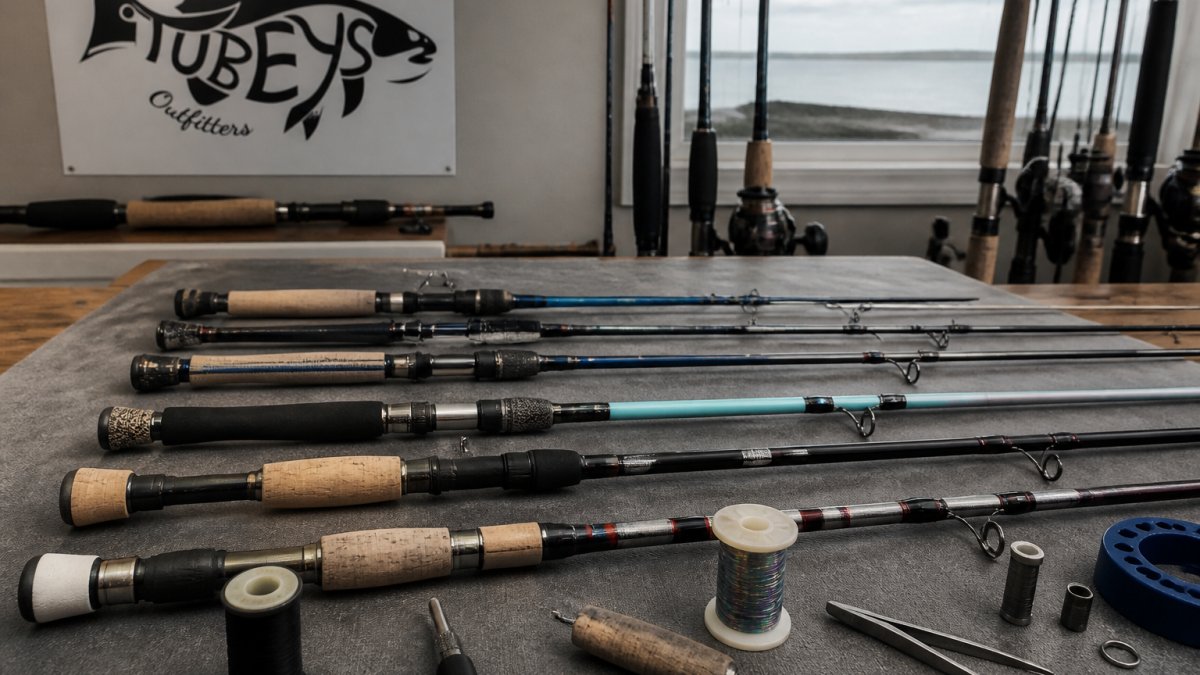
 Listicle
7 Custom Fishing Rods to Buy Online in 2026
Last Updated: November 2, 2026
Quick Summary
You can buy custom fishing rods online in 2026 directly from Tubey's Outfitters. Start with your application, then confirm line rating, rod power, action, guides, and handle material in writing before you pay.
- Tubey's Outfitters builds rods tested in both freshwater and coastal environments for inshore anglers.
- A fast-action rod with medium-light to medium power is a common inshore setup for redfish and speckled trout.
- Confirm lead time, return policy, warranty, shipping, and written specifications before approving any build.
- Saltwater buyers should verify corrosion-resistant guides and frames before ordering a coastal rod.
Table of Contents
- Quick Comparison: 7 Custom Fishing Rods to Buy Online in 2026
- How We Evaluated These Custom Fishing Rod Builders
- 1. Tubey's Outfitters: Custom Inshore Fishing Rods Built by Anglers
- The Best Rod Action for Redfish and Speckled Trout
- Custom Fishing Rods for Bass: What Changes in Freshwater
- What to Check Before You Order a Custom Rod Online
- Frequently Asked Questions
Quick Comparison: 7 Custom Fishing Rods to Buy Online in 2026
If you want to buy custom fishing rods online in 2026, the smartest starting point is a builder whose blanks, guides, and grips match the water you actually fish. Tubey's Outfitters sits at the top of this list for inshore anglers because our rods are designed and tested by fishermen who chase redfish and speckled trout on the coast and bass in freshwater.
A custom-built rod is a fishing rod assembled to your specifications, with the blank, guides, handle material, and grip chosen for your target species and technique. Off-the-shelf rods are built to a generic average. A bespoke rod is built to you.
How We Evaluated These Custom Fishing Rod Builders
We judged every builder on five things: blank quality, guide and eyelet placement, handle and grip material, how clearly they publish rod specifications, and how easy the online ordering process is. We also weighed whether a builder serves saltwater, freshwater, or both.
American Sportfishing Association industry data confirms that anglers increasingly shop gear online, so ordering clarity matters as much as build quality. A builder who hides lead times or return terms loses points, no matter how good the rod is.
The blanks themselves tell you a lot. Builders working with quality rod blanks give you a better starting point for sensitivity and strength. Light to medium-light power blanks suit inshore finesse work, while heavier blanks handle big fish and heavy cover.
We scored each builder on casting distance, sensitivity, responsiveness, and durability, then ranked them by how well the whole package serves a real angler.
1. Tubey's Outfitters: Custom Inshore Fishing Rods Built by Anglers
Our top pick is Tubey's Outfitters. Its rods come from a father-and-son team who live and breathe fishing.
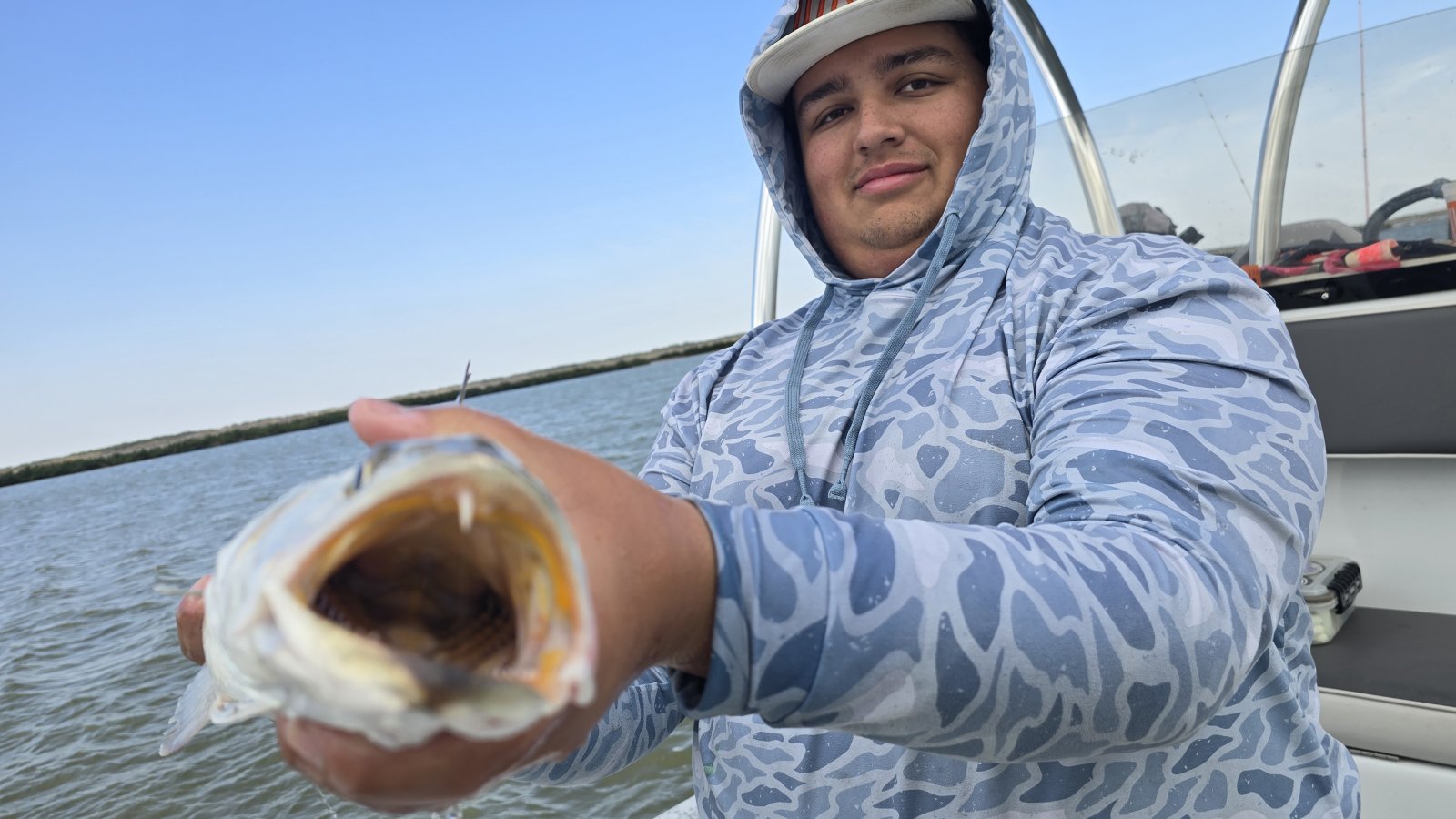
Brent showing off the tooth of a trout caught in the lower laguna madre/ South Padre Island,TX on the flats using one of our custom fishing rods from our 25ft Dargel HDX Kat.
We build custom inshore fishing rods for anglers who want gear tested in both freshwater and coastal environments. Every rod is designed to put more fish in the boat, with components chosen for real-world fishing conditions rather than a catalog spec sheet.
What sets us apart is the testing. Our products are tested in both freshwater and coastal environments, so a rod we sell you for the coast is built for real-world conditions inland too.
Best for: inshore saltwater anglers and mixed fresh/salt weekend warriors. Skip if: you only want a budget big-box rod and never plan to customize.
You can browse the full lineup of custom fishing poles and see exactly what we build.
Kraemer Custom Rods, Made in the USA | Highest quality, most sensitive rods money can buy to anglers
The Best Rod Action for Redfish and Speckled Trout
The short answer: a fast-action rod with medium-light to medium power is a common inshore setup for redfish and speckled trout. The useful answer is how to adjust that baseline by species, water clarity, cover, and the way you actually fish. Inshore saltwater rewards sensitivity, and rods that are too stiff or too slow can cost you fish.
Match the rod to the species
- Speckled trout: favor a fast tip and medium-light power. Trout often pick up a soft plastic and hold it, so a rod that telegraphs the tick makes the difference between a hookup and a missed fish. A fast tip also helps cast light jigs into wind.
- Redfish: step up to medium power with a fast action. Redfish pull harder and often run for structure, so you need backbone to set the hook and turn a fish away from grass edges and oyster shell.
- Mixed bags: a medium-light to medium fast-action rod covers both, which is why it is the default inshore recommendation.
Match the rod to the water and cover
On open grass flats with clear water, favor finesse: lighter line, lighter jig heads, and a rod that loads smoothly for accurate, quiet presentations. Around oyster shell, dock pilings, and mangrove edges, favor power and a faster tip to turn fish before they wrap you. In windy conditions, a rod with a fast tip and enough backbone to punch a cast into the wind keeps you fishing when lighter setups force you to wait.
Match the rod to your line and lure weight
Line rating is the spec most often ignored and most often regretted. Match the rod's line weight to the braid or fluorocarbon you actually fish, and keep rod power in the medium-light range for finesse work and medium for heavier cover. If you throw mostly light jig heads and soft plastics, a rod rated for lighter line will cast them more accurately than a heavy-power rod. If you throw heavier lures or fish heavy cover, the opposite is true.
Match the rod to your experience level
Newer inshore anglers often do better with a slightly more forgiving moderate-fast action that loads easily and casts smoothly. Experienced anglers who cast accurately and set hooks quickly can take advantage of a faster, stiffer rod. Neither is "better", they suit different hands.
For clear, shallow water where accurate, quiet presentations matter, a fast-action rod paired with the right soft plastic technique is a common setup. Our guide to soft plastic fishing techniques for coastal water pairs well with this rod choice, and the same logic carries over to freshwater bass fishing when you trailer inland: match the rod to the technique, the cover, and the line you actually fish.
Custom Fishing Rods for Bass: What Changes in Freshwater
Custom fishing rods for bass shift the priorities toward power, hook-setting speed, and cover handling. Where inshore rods favor finesse and sensitivity, bass rods often need more backbone for flipping, pitching, and pulling fish out of grass and wood.
A freshwater bass rod typically runs heavier in power than an inshore trout rod. If you fish heavy cover, you want a rod with the strength to haul a bass out before it wraps you in structure. If you fish open water with soft plastics, a lighter, more sensitive rod wins.
Handle material and grip shape matter more in freshwater than many anglers expect, because bass fishing often means repeated casts all day. Comfort and ergonomics reduce fatigue and improve accuracy.
For a deeper look at matching tackle to bass, our soft plastics complete guide covers the lure side of the equation. The rod and the lure work as a system, and a custom rod built for your bass technique ties them together.
What to Check Before You Order a Custom Rod Online
Most custom rod builders show you a product page and a buy button, then leave the hard parts, spec confirmation, design approval, lead time, and repair terms, to email. That is the gap this section fills. Below is the practical sequence for buying a made-to-order rod online in 2026, plus the five checkpoints that separate a smooth order from an expensive mistake. The same process applies whether you are ordering an inshore rod for redfish and speckled trout on the Lower Laguna Madre or a bass rod for freshwater grass and wood.
The online ordering walkthrough
- Choose the application first, not the blank. Start with species, water type, and technique. An inshore rod for casting soft plastics to tailing redfish on a grass flat is a different build from a bass flipping stick. Builders who organize by technique make this step easier; builders who organize by blank model make you do the translation.
- Lock the specifications in writing. Before you pay, get line rating, rod power, rod action, guide type and placement, handle material, grip length, and butt configuration confirmed in an email or order note. A verbal "medium-fast" means different things to different builders.
- Approve the design. Most made-to-order builders send a build sheet or design confirmation before the blank is cut. Read it line by line. This is your last cheap chance to change guide placement or grip shape.
- Confirm lead time and shipping. Ask for a build window in weeks, not "soon," and confirm how the rod ships, tube type, insurance, and signature requirement. A fragile one-piece rod shipped without a rigid tube is a claim waiting to happen.
- Track and inspect on arrival. Inspect guides, wraps, and the handle transition before you fish the rod. Report any defect before the first trip, because many builders treat post-use damage differently from shipping damage.
The five checkpoints
- Lead time: get a build window in weeks. Confirm the build window with the builder before you pay.
- Return policy: confirm whether a custom rod can be returned and under what terms.
- Warranty and repair: ask what happens if a guide, wrap, or blank fails, who pays shipping both ways, and whether repairs are done in-house. A guide replacement is routine; a blank failure is a different conversation.
- Shipping: confirm cost, tube type, and insurance for a fragile item. Saltwater anglers should also ask how reels and rods are packed together if ordered as a combo.
- Specifications: get line rating, rod power, rod action, guide placement, and handle material in writing before the build starts.
Saltwater-specific checks for inshore buyers
If the rod will see coastal water, especially the clear, grass-flat conditions of the Lower Laguna Madre, add three checks to the list. First, confirm corrosion-resistant guides and frames; standard chrome guides pit quickly in salt. Second, ask about handle material and grip shape for wet, sunny days; a slick grip costs you accuracy on a long wade. Third, confirm the rod's line rating against the braid you actually fish, since inshore finesse work often runs lighter line than the blank's maximum. Freshwater bass buyers can skip the corrosion check but should still confirm hook-set speed and cover-handling power in writing.
How price and labor affect the order
Custom rod pricing depends on quantity, specifications, and the builder's current rates; contact Tubey's Outfitters for current pricing or a quote. A premium blank and corrosion-resistant guides raise the component cost; complex guide layouts, custom grips, and decorative wraps raise labor. Builders who publish prices make comparison easier, while builders who quote per order let you trade component upgrades against labor. Ask for a line-item breakdown so you can see where the money goes before you approve the build.
Frequently Asked Questions
What should I look for when buying a custom fishing rod online?
Focus on four things: the rod blank and its line-weight and power rating, the guide type and placement, the handle and grip material, and the builder's lead time and return policy. Ask for the exact line rating and action before you pay, since those decide whether the rod suits your technique. Confirm whether the rod is built for saltwater hardware, and check what happens if the finished rod doesn't feel right in your hands. A builder who answers those questions clearly is usually a safe order.
Are custom fishing rods worth it for inshore fishing?
For inshore work they often are. Factory rods are built to fit a broad average, while a custom build lets you match action, length, and guide layout to the way you actually fish flats, marshes, and shorelines. That matters when you're casting at redfish and speckled trout in wind and shallow water. The tradeoff is cost and lead time, so a custom rod pays off most for anglers who fish hard and want one rod that feels right rather than several that feel close.
What rod action is best for redfish and speckled trout?
A fast or extra-fast action covers most redfish and speckled trout fishing, paired with a medium or medium-light power rating depending on lure weight and wind. Fast actions load quickly for short, accurate casts and give you backbone to turn a redfish away from structure. Softer, moderate actions can help with treble-hooked lures and light jigheads. Tell your builder which lures you throw most and how much wind you fish in, and they can tune the action to that.
Can I customize a fishing rod for both saltwater and freshwater use?
Yes, but be honest about the split. Saltwater demands corrosion-resistant guides and a reel seat and grip that handle spray and sun, while freshwater bass fishing often favors lighter blanks and different actions. If you fish both, tell the builder your percentage split and the heaviest fish you expect. Many anglers end up ordering one saltwater-focused inshore rod and one freshwater rod rather than compromising a single build, which usually performs better in both settings.
How should I care for a custom fishing rod after saltwater use?
Rinse the rod with fresh water after every saltwater trip, paying attention to the guides, reel seat, and any exposed threads. Wipe it dry with a soft cloth and let it air dry fully before storing it in a rod sock or tube. Check guide feet and wraps for nicks or loose finish, and address small issues before they spread. Avoid storing a rod in a hot vehicle for long stretches, since heat and sun degrade grips and finishes over time.