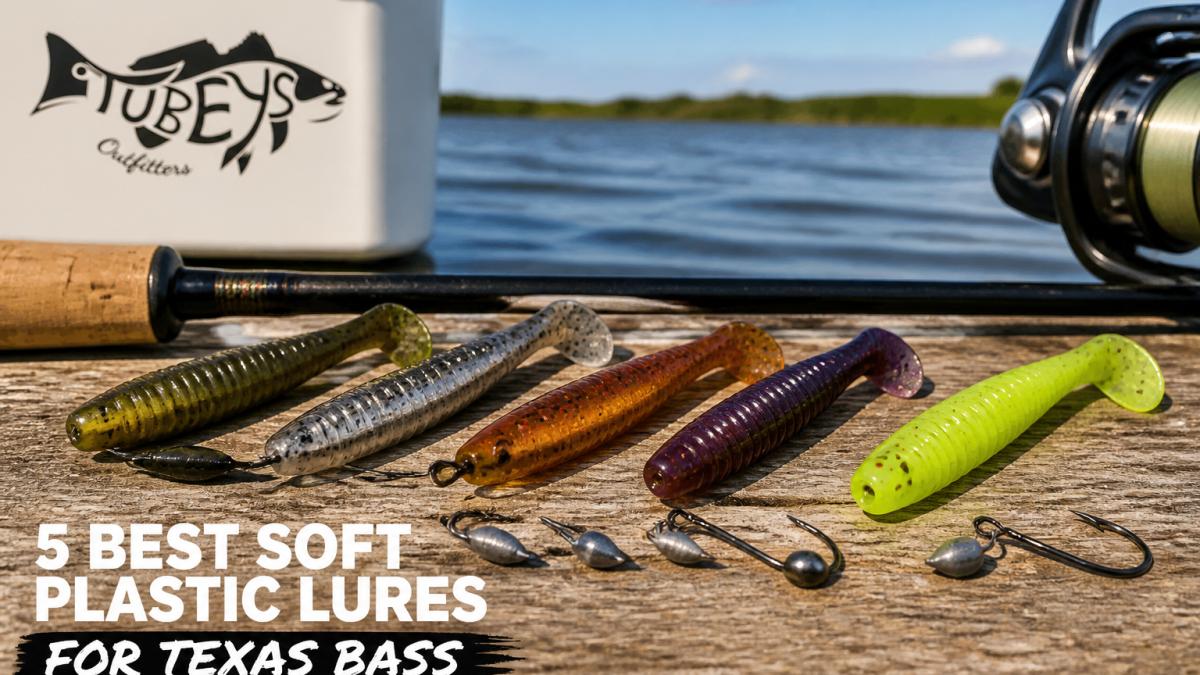
 Listicle
5 Best Soft Plastic Lures for Texas Bass
Table of Contents
- Soft Plastic Lures: Why Color and Water Clarity Matter
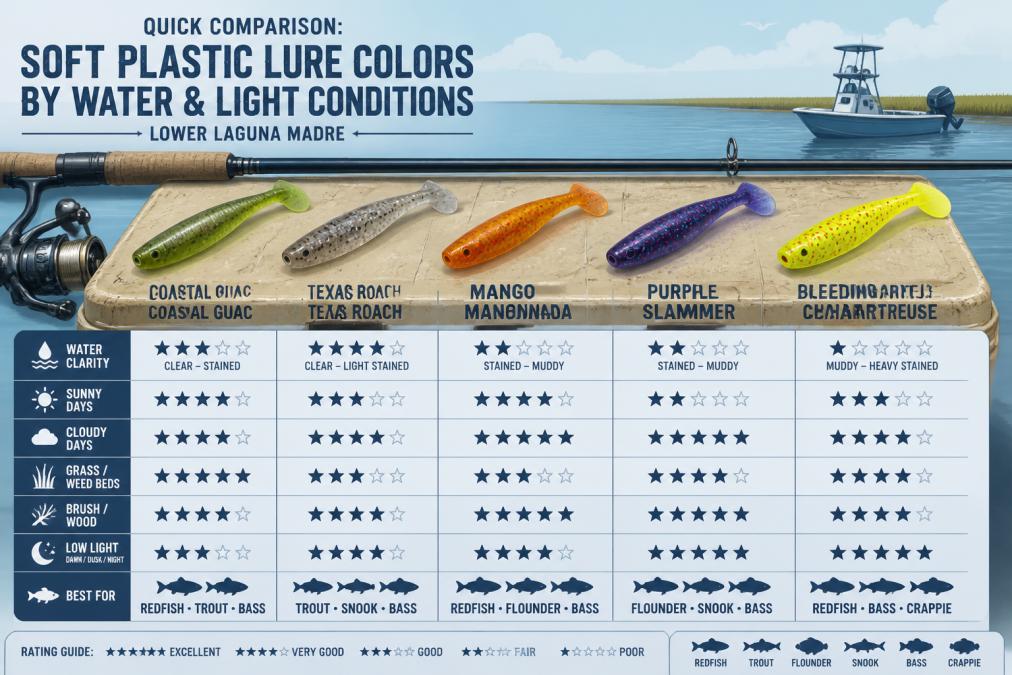
- Quick Comparison: Soft Plastic Lure Colors by Water and Light Conditions
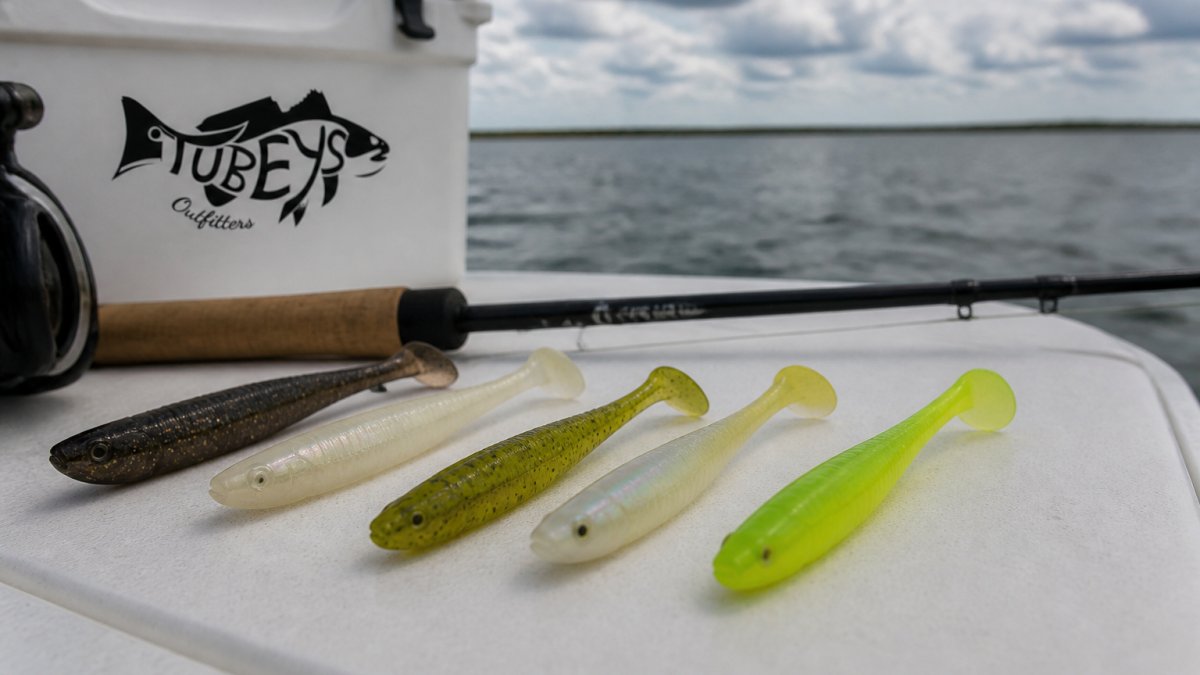
- 1. Coastal Guac: Your Clear Water Weapon
- 2. Texas Roach: The Versatile All-Purpose Choice
- 3. Mango Mangonada: Stained Water Trigger
- 4. Purple Slammer: Low-Light and Overcast Specialist
- 5. Bleeding Chartreuse: Muddy Water Reaction Strike
- Best Soft Plastics for Redfish and Saltwater Inshore Species
- Soft Plastic Lure Rigging Techniques for Maximum Action
- Common Mistakes When Choosing Soft Plastic Colors
- Frequently Asked Questions
Last Updated: September 30, 2026
Soft Plastic Lures: Why Color and Water Clarity Matter
Choosing the right soft plastic lures for Texas bass, redfish, trout, and snook comes down to one fundamental truth: water clarity and light conditions dictate which colors trigger strikes. A bright chartreuse that draws aggressive hits in muddy Lower Laguna Madre flats might spook fish in crystal-clear spring-fed ponds. The best soft plastic lures match what fish can actually see and what they instinctively chase based on their environment.
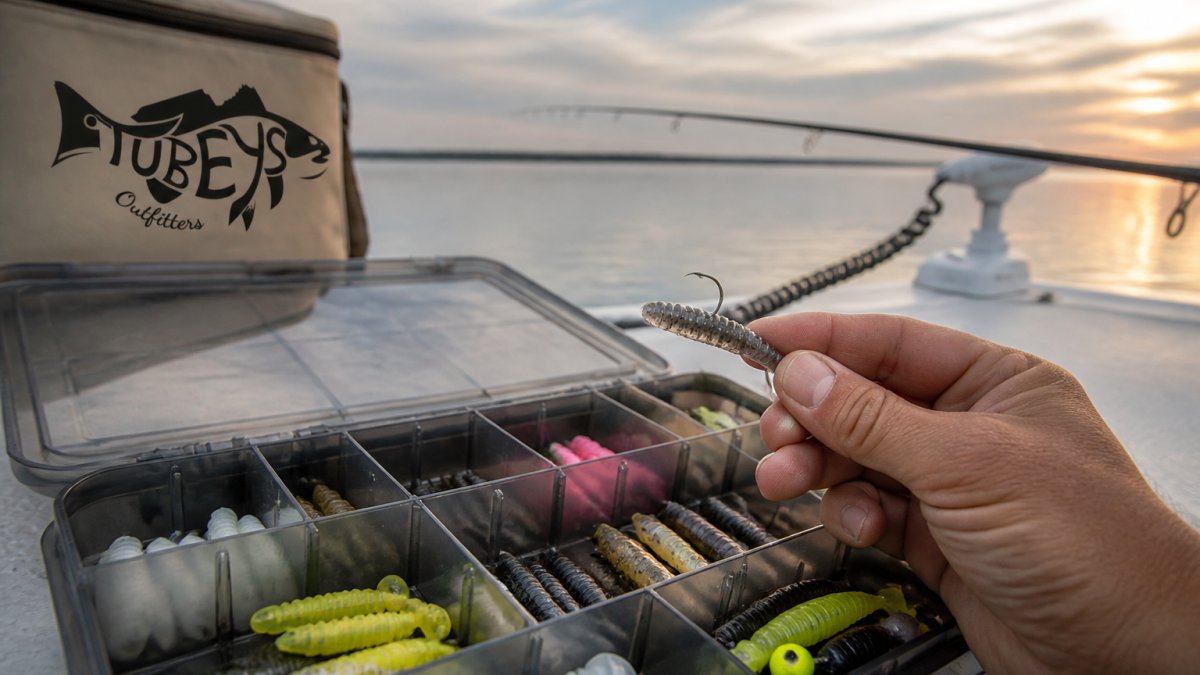
This guide from Tubey's Outfitters covers the five color profiles that work across Texas freshwater and saltwater conditions. Each color excels in different water clarities, light windows, and structure types. Below, we'll show you exactly when to throw each color and why it works.
Quick Comparison: Soft Plastic Lure Colors by Water and Light Conditions
| Lure Color | Best Water Clarity | Best Light Condition | Best Situation |
|---|---|---|---|
| Coastal Guac | Clear to slightly stained | Sunny, bright conditions | Spring-fed lakes, clear coastal flats |
| Texas Roach | Stained to slightly muddy | Medium to overcast light | Grass beds, brush piles, general purpose |
| Mango Mangonada | Stained to muddy | Overcast, cloudy days | Murky bays, post-rain conditions, redfish flats |
| Purple Slammer | Any clarity | Low light, dawn/dusk | Early morning, late evening, cloudy weather |
| Bleeding Chartreuse | Muddy to very turbid | Any light condition | High-pressure situations, thick cover, reaction strikes |
1. Coastal Guac: Your Clear Water Weapon
Coastal Guac is the go-to soft plastic lure for clear water across both freshwater and saltwater. When visibility runs 3 feet or deeper, this natural greenish-brown profile mimics local forage, mullet, and shad that bass, redfish, and trout hunt. The color works because it creates a subtle profile rather than a high-contrast silhouette. In clear Lower Laguna Madre flats or spring-fed Texas lakes, fish get a good look at your lure before committing.
Rig Coastal Guac on a Texas-rig with a 3/16-ounce bullet weight for grass flats, or drop it on a finesse jig head in deeper channels. The key is a slow, deliberate retrieve that lets the natural action speak.
2. Texas Roach: The Versatile All-Purpose Choice
Texas Roach is the soft plastic lure that belongs in every tackle box. This natural brown-and-tan profile works in stained water, slightly muddy conditions, and clear water alike. It mimics crawfish and natural forage patterns that bass, crappie, and redfish recognize year-round. Its realistic appearance works in grass beds, around brush piles, and along channel ledges.
Texas Roach excels during mid-day periods when light is moderate and water clarity sits in that middle zone. Rig it Texas-style with a 1/4-ounce weight for standard presentations, or drop shot for vertical jigging in deeper water. Leave the worm slightly loose on the hook to maximize tail action and vibration.
3. Mango Mangonada: Stained Water Trigger
Mango Mangonada is a high-contrast soft plastic lure designed specifically for stained and muddy water. The vibrant orange-and-tan pattern creates visibility in low-clarity conditions where natural colors disappear. This is your color for post-rain flats, tidal exchanges in the Lower Laguna Madre, and anywhere runoff has colored the water.
Fish in stained water rely more on vibration and contrast than subtle detail. Pair Mango Mangonada with a 3/8-ounce bullet weight on a Texas-rig to create more vibration and help fish feel the lure through murky water. Speed up your retrieve slightly. This color also excels in heavy grass and thick cover where redfish hunt.
4. Purple Slammer: Low-Light and Overcast Specialist
Purple Slammer is the soft plastic lure for dawn, dusk, and overcast conditions. The dark purple profile creates a strong silhouette against lighter skies and water surfaces. Fish use silhouettes to hunt during low-light windows, and Purple Slammer plays directly into that instinct.
This color works across all water clarities because it relies on contrast rather than detail. Purple Slammer is underrated for cloudy days, when cloud cover blocks direct sunlight, water clarity becomes less important than contrast. Rig it on a standard Texas-rig or jig head and work it with moderate to fast retrieves that emphasize the silhouette effect.
5. Bleeding Chartreuse: Muddy Water Reaction Strike
Bleeding Chartreuse is the nuclear option for muddy water and high-pressure situations. This bright yellow-and-red soft plastic lure creates maximum visibility when visibility drops below 1 foot and fish are locked in heavy cover. The bleeding red accents add an injury pattern that suggests an easy meal.
Bleeding Chartreuse also works for reaction strikes when fish are pressured or inactive, even in clearer water. Use it as a search tool when you're not sure where fish are located. Pair it with faster retrieves and slightly heavier weights to maximize vibration. Avoid this color in clear water where it can spook fish.
Best Soft Plastics for Redfish and Saltwater Inshore Species
Redfish, spotted trout, flounder, and snook have different sight lines and hunting patterns than freshwater bass. Saltwater inshore species rely more on vibration and lateral-line detection in turbid coastal water, which means your soft plastic lure selection shifts toward higher-contrast colors and more pronounced action.
Water Clarity and Tidal Cycles in Coastal Systems
In the Lower Laguna Madre and similar coastal systems, water clarity changes dramatically with tides and wind. A stained-water color like Mango Mangonada or Bleeding Chartreuse works better for morning and midday tides when visibility is compromised by tidal exchange and suspended sediment. Late afternoon tides often push clearer water into the flats; this is when Coastal Guac shines.
Tidal stage directly affects which colors produce. During incoming tides, water clarity typically improves as cleaner water moves into the system; start with Coastal Guac or Texas Roach. During outgoing tides, visibility often decreases; Mango Mangonada and Bleeding Chartreuse become more effective. During slack tide, water clarity is often at its worst; high-contrast colors and faster retrieves trigger reaction bites.
Redfish: Crawfish Patterns and Structure Hunting
Redfish respond to crawfish patterns and natural forage. Texas Roach works exceptionally well because it mimics the crawfish that make up a significant portion of their diet year-round. Pair it with a 3/16-ounce weight on a Texas-rig and work it slowly through grass and around shell structure.
In winter (December-February), when water temperatures drop below 60°F, redfish become lethargic and move to deeper channels. Switch to Coastal Guac or Texas Roach on a finesse rig (1/8-ounce jig head) and fish vertically in deeper water. In spring (March-May), as water warms to 65-75°F, redfish move shallow onto grass flats. Use a 3/16-ounce Texas-rig weight and work the flats methodically. In summer (June-August), redfish retreat to deeper channels and mangrove shorelines. Mango Mangonada and Purple Slammer work well in these shadier environments. Fish early morning and late evening when redfish move shallow to feed.
Spotted Trout: Speed and Contrast in Stained Water
Spotted trout prefer slightly faster presentations and higher-contrast colors than redfish. Purple Slammer and Mango Mangonada both trigger aggressive strikes from trout in stained water. Match the color to water clarity, then adjust your retrieve speed based on bite intensity.
In spring, trout spawn in deeper channels and around structure. Use Texas Roach or Coastal Guac on a finesse rig; a slow, methodical presentation works better than a fast retrieve. In summer, trout move to deeper channels to escape heat. Bleeding Chartreuse works well in these darker environments. On sunny days, use Coastal Guac in clear water and Texas Roach in stained water. On overcast days, shift to Purple Slammer or Mango Mangonada.
Flounder and Snook: Ambush Predators and Structure Dependency
Flounder respond well to natural colors like Texas Roach because they hunt by sight and prefer realistic-looking prey. Work Texas Roach slowly along the bottom near structure, pausing frequently to let the lure settle. Flounder strike on the pause.
Snook often prefer slightly darker, more aggressive presentations. Bleeding Chartreuse and Purple Slammer both work for snook in heavy cover and low-light conditions. Snook are aggressive hunters and respond well to faster retrieves and high-contrast colors. Fish around mangrove roots, dock pilings, oyster bars, and channel ledges. Use a 3/16-ounce to 1/4-ounce weight depending on depth and current.
Water Temperature as a Seasonal Guide
Water temperature controls coastal fish behavior and color effectiveness across all species:
- *50-60°F (Winter, December-February): Fish are lethargic and deep. Use Coastal Guac and Texas Roach on finesse rigs in deeper channels. Avoid bright colors.
- *60-70°F (Early Spring, March-April): Fish move shallow and become more active. Texas Roach and Coastal Guac work well on flats.
- *70-80°F (Late Spring/Early Summer, May-June): Fish are aggressive and feeding heavily. All five colors work; match color to water clarity.
- *80-88°F (Summer, July-August): Fish retreat to deeper structure and low-light areas. Mango Mangonada, Purple Slammer, and Bleeding Chartreuse work better than natural colors. Fish early morning and late evening.
- *75-85°F (Fall, September-October): Fish move shallow again as water cools. Texas Roach and Coastal Guac dominate.
The Systematic Approach to Saltwater Color Selection
Carry all five soft plastic lure colors and switch based on conditions and tidal stage. Start with Coastal Guac in clear water during incoming tides. Move to Texas Roach in stained conditions or during slack tide. Escalate to Mango Mangonada or Bleeding Chartreuse if visibility drops further or during outgoing tides. Use Purple Slammer during dawn, dusk, and overcast conditions regardless of water clarity.
Soft Plastic Lure Rigging Techniques for Maximum Action
How you rig a soft plastic lure matters as much as which color you choose. A poorly rigged lure won't produce the action that triggers strikes, even if the color is perfect for conditions.
Texas Rigging Fundamentals
Texas rigging is the foundation for soft plastic lures. Rig your lure weedless by threading the hook eye through the head of the lure, then burying the hook point just under the plastic. The weight you choose directly affects action and vibration. A 3/16-ounce bullet weight works for shallow grass flats and finesse presentations in clear water. A 1/4-ounce weight is the standard all-purpose size for most Texas-rig fishing. A 3/8-ounce weight adds vibration and works better in stained water and deeper structure. Match your weight to water clarity and depth: clearer water and shallow conditions call for lighter weights, while stained water and deeper presentations need heavier weights.
Hook Selection and Size Mechanics
The offset worm hook is critical for Texas-rigging. A poor-quality hook or wrong size will create twist and kill the action. Invest in quality offset hooks. Most anglers use 2/0 to 4/0 hooks depending on lure size and target species. For redfish and snook in heavy cover, a 3/0 or 4/0 hook provides the gap and strength needed to drive the point through their harder mouths. For freshwater bass and crappie, a 2/0 to 3/0 hook is typically sufficient.
Hook gap, the distance between the point and the shank, is equally critical. Test your hook gap by pressing the point against your thumbnail; it should require moderate pressure to penetrate. If it slides easily, the point is too sharp or the gap is too wide. If it requires excessive pressure, the hook is dull and needs replacement.
Rod and Reel Gear Ratios for Soft Plastic Presentations
For Texas-rig fishing in grass and brush, a 6.5-foot to 7-foot medium-power rod with a fast action tip provides the sensitivity to feel bottom contact and structure while delivering enough backbone to drive the hook through a fish's mouth. A 6.3:1 gear ratio (standard on most baitcasters) allows you to work soft plastics at a natural pace and set the hook with a firm, controlled motion. A faster 7.1:1 or 8.1:1 gear ratio is useful for covering water quickly with reaction colors like Bleeding Chartreuse. For finesse presentations with Coastal Guac in clear water, a slower 5.4:1 ratio allows more deliberate, controlled retrieves.
Finesse Rigging for Clear Water
Finesse rigging uses a small jig head instead of a Texas-rig. A 1/8-ounce jig head creates a natural fall and subtle action that matches light presentations. This technique works exceptionally well for Coastal Guac and Texas Roach in clear water and low-pressure situations. Pair finesse presentations with a 6:1 or slower gear ratio to avoid working the lure too fast.
Wacky Rigging and Vertical Presentations
Wacky rigging threads the hook through the middle of the soft plastic lure, creating a horizontal presentation with an erratic, wounded-baitfish action. This rigging style works well for stick-style lures and creates more vibration on the drop, making them effective for suspended fish and vertical presentations in deeper channels and around structure. For redfish and trout in the Lower Laguna Madre, wacky rigging works particularly well around shell structure and deeper holes.
Troubleshooting Common Rigging Failures
Lure spinning or creating line twist: This occurs when the hook offset is too extreme or when the lure is rigged too tight. The plastic should slide freely on the hook shank. If your lure spins, loosen the rigging slightly and ensure the hook point is buried just under the plastic surface.
Hook point exposure on weedless rigs: If your hook point is exposed and catching grass, you've buried it too shallow. The point should be completely hidden under plastic. If the point is hidden but you're still catching weeds, your weight is too light; increase weight by one size increment.
Lures tearing at the head: This happens when the hook eye is too large for the lure diameter or when you're using a hook with a barbed shank. Switch to a hook with a smaller eye or a non-barbed shank.
Poor tail action or no vibration: A Texas-rigged lure that's too tight won't have proper tail action. The lure should hang naturally on the hook with the tail free to move. Test by holding the rigged lure horizontally; the tail should droop slightly and move freely when you shake the lure gently.
Missing fish on the hookset: If you're hooking fish but they're throwing the lure, your hook gap is likely too wide or your hook is dull. Replace the hook and test the point again.
Common Mistakes When Choosing Soft Plastic Colors
The biggest mistake is throwing natural colors in muddy water. Coastal Guac and Texas Roach are excellent lures, but they disappear in water clarity below 2 feet. If you're fishing stained or muddy conditions and not getting bites, switching to a high-contrast color like Mango Mangonada or Bleeding Chartreuse often produces immediate results.
Another common error is ignoring light conditions. Purple Slammer is a specialized color for low-light situations, but many anglers never throw it. Dawn and dusk are prime feeding windows, and Purple Slammer is specifically designed for these conditions.
Rigging mistakes also kill productivity. A Texas-rigged lure that's too tight won't have proper tail action. A lure rigged too loose will spin and create line twist. Spend time getting your rigging right.
Many anglers also fail to match lure size to conditions. In clear water, slightly smaller profiles work better because fish get a good look at your lure. In stained water, slightly larger profiles create more vibration and are easier for fish to locate.
Pressure matters too. Fish that have seen plenty of artificial lures respond better to natural colors and subtle presentations. Fish in low-pressure situations often respond to aggressive colors and faster retrieves.
The final mistake is not carrying all five colors. Carrying Coastal Guac, Texas Roach, Mango Mangonada, Purple Slammer, and Bleeding Chartreuse gives you a color solution for every condition you'll encounter in Texas freshwater and saltwater fishing.
Choosing the right soft plastic lures for Texas bass, redfish, and trout isn't about luck, it's about matching color to water clarity and light conditions. The five colors we've covered solve every scenario you'll face on the water. At Tubey's Outfitters, we've poured these colors specifically for Texas anglers fishing both coastal and freshwater environments. Each color is tested to deliver the action and vibration that triggers strikes when conditions matter most. SHOP TUBEYS GEAR and stock your tackle box with soft plastic lures designed by fishermen who fish the same water you do.
Frequently Asked Questions
What water clarity determines which soft plastic color to use?
Water clarity is the primary driver of soft plastic lure color selection. In clear water (visibility 3+ feet), use natural colors like Coastal Guac and Texas Roach because fish rely on sight. In stained water (1-3 feet visibility), switch to medium-contrast colors like Mango Mangonada. In muddy water (under 1 foot), use high-visibility colors like Bleeding Chartreuse. Light conditions matter too: bright sun favors natural profiles, while cloudy days and dawn/dusk call for darker silhouettes like Purple Slammer.
Are soft plastic lures effective for both freshwater bass and saltwater redfish?
Yes. The same soft plastic lure colors work across freshwater bass, crappie, and saltwater species like redfish, trout, flounder, and snook. The key is matching color to water clarity and light conditions rather than species. Redfish in clear inshore grass beds respond to Coastal Guac just like largemouth bass do in clear lakes. Muddy Lower Laguna Madre conditions call for Bleeding Chartreuse whether you're targeting redfish or bass. Rigging and retrieve speed may differ, but the color logic is universal.
Why does water temperature affect which soft plastic lures work best?
Cooler water (below 55°F) slows fish metabolism, so they prefer subtle, finesse profiles with minimal action. Warmer water (70°F+) triggers aggressive feeding, so high-action swimbaits and craws produce better. Spring spawn (60-70°F) favors natural forage colors like Texas Roach. Summer (75°F+) in deep structure calls for reactive colors like Mango Mangonada or Bleeding Chartreuse to trigger strikes. Fall cooling favors transitional colors and slower presentations.
What makes Tubey's Outfitters soft plastic lures different from mass-market options?
Tubey's Outfitters soft plastics are designed and tested by Texas anglers who fish both freshwater lakes and saltwater inshore flats. Every color, Coastal Guac, Texas Roach, Mango Mangonada, Purple Slammer, and Bleeding Chartreuse, is formulated for proven action and durability in real-world conditions. The company tests products on redfish, trout, and bass before release, ensuring each lure performs in both clear and stained water. That field-tested approach means you're buying lures built by people who fish them, not just marketed by a corporate brand.