 blog
Are Soft Plastic Swimbaits Worth It? A Real Test
Table of Contents
- What Soft Plastic Swimbaits Actually Do
- Best Soft Plastic Swimbait Choices for Your Target Fish
- Soft Plastic Swimbait Rigging: Setup That Works
- Soft Plastic Swimbait Durability: What Lasts and What Doesn't
- Soft Plastic Swimbaits for Redfish: Saltwater Performance
- Soft Plastic Versus Hard Swimbaits: When Each One Wins
- Beginner-Friendly Setup and Total Tackle Requirements
- The Real Answer: Are They Worth It?
- Frequently Asked Questions
Last Updated: October 13, 2026
What Soft Plastic Swimbaits Actually Do
Soft plastic swimbaits are lures designed to mimic the natural movement of baitfish through water. The realistic swimming action comes from a flexible tail that generates a side-to-side paddle motion, combined with a body that rolls and undulates as the lure moves. This isn't just visual appeal, the action triggers predatory instincts in bass, redfish, trout, and other gamefish that hunt by sight and feel.
The difference between a soft plastic swimbait and other soft plastics lies in the tail design and body profile. A quality swimbait has a tapered body that displaces water efficiently, creating a natural baitfish silhouette. The tail kick generates vibrations that travel through the water column, signaling "live food" to fish below the surface. In clear water, the visual profile matters most. In stained or murky conditions, the vibration and movement pattern become the primary trigger.
How swimming action and realistic profile work
The swimming action of a soft plastic swimbait depends on tail design, body weight distribution, and how you retrieve it. A paddle tail generates a wider, more aggressive kick, useful in saltwater for redfish and larger bass. A shad-style tail produces a tighter, more natural wobble that works well in both freshwater and coastal conditions.
Body profile matters equally. A swimbait that mimics a mullet or shad profile appeals to saltwater predators like redfish and trout in the Lower Laguna Madre. Freshwater anglers targeting largemouth bass often prefer a profile that matches local forage, crawfish-shaped bodies or herring profiles depending on the lake.
The retrieve speed determines how much action the tail generates. A slow roll at 1-2 feet per second produces a tight, subtle movement. A faster retrieve speeds up the tail kick and creates more vibration. Most effective fishing happens somewhere in the middle, a steady, moderate retrieve that keeps the lure in the strike zone without looking unnatural.
Why baitfish imitation matters in different water conditions
Clear water demands accuracy. Redfish and trout in shallow saltwater flats can see a poorly designed lure from 10 feet away. A realistic profile and natural swimming action become critical. In the Lower Laguna Madre, where visibility often reaches 3-4 feet on good days, the lure's appearance directly influences bite rates.
Stained water shifts the priority. Redfish and bass rely more on lateral line detection and vibration. A swimbait with a pronounced tail kick and solid body that displaces water becomes more effective than a perfectly realistic lure that barely moves water. In murky conditions, anglers often switch to larger swimbaits or ones with more aggressive tail action.
Color selection interacts with water clarity. In clear saltwater, natural colors like silver, pearl, and tan work best. In stained water, chartreuse, white, and darker profiles produce more bites. This applies equally to freshwater lakes with reduced visibility.
Best Soft Plastic Swimbait Choices for Your Target Fish
Bass fishing with soft plastics in freshwater
Largemouth bass respond aggressively to soft plastic swimbaits in freshwater lakes and rivers. The key is matching the swimbait size and profile to local forage. In lakes where bluegill and shad are primary food sources, a 4-6 inch swimbait with a shad profile works consistently.
Retrieve depth matters in freshwater. Bass suspend at different depths depending on season and water temperature. A weighted jig head allows you to control depth precisely, drop the swimbait near structure, then work it with a slow roll or lift-and-fall retrieve. Unweighted swimbaits work better in shallow water or around dense cover where you need to avoid snags.
The advantage of soft plastic swimbaits over hard lures in freshwater is versatility. You can rig them on different jig heads, vary your retrieve speed, and work them through thick vegetation or around fallen timber without the constant hang-ups that hard swimbaits create. A 5-inch swimbait rigged on a 1/4-ounce jig head handles most freshwater scenarios, shallow flats, deeper channel ledges, and everything in between.
Redfish and trout in saltwater inshore
Redfish in the Lower Laguna Madre and other coastal systems hunt soft plastic swimbaits with remarkable consistency. These fish are structure-oriented and hunt by both sight and feel. A 4-5 inch swimbait with a realistic mullet or shad profile matches the primary forage in most saltwater systems.
Rigging matters in saltwater. Redfish often hold in shallow water around mangrove roots, oyster shells, and grass flats. A weedless rig using a wide-gap hook and a swimbait threaded on the hook allows you to fish tight to cover without constant hang-ups. The exposed hook point still penetrates cleanly when a redfish strikes.
Trout respond similarly to redfish but often suspend in slightly deeper water. In the Lower Laguna Madre, trout frequently hold 3-6 feet deep along channel edges and near deep grass beds. A weighted jig head (1/4 to 3/8 ounce) lets you reach these depths while maintaining control over your retrieve speed. The slower presentation that trout prefer, a subtle, steady roll rather than an aggressive retrieve, works best with a lighter jig head that allows the swimbait's tail to generate natural action without the head pulling too hard.
Soft Plastic Swimbait Rigging: Setup That Works
Hook size and weighted hook selection
Hook size directly impacts swimbait performance and durability. A 4-5 inch swimbait pairs best with a 2/0 to 4/0 hook. Larger hooks (5/0 and up) work for bigger swimbaits (6+ inches) or when targeting larger fish like big redfish or pike.
Weighted hooks (jig heads) serve two purposes: they control depth and they stabilize the swimbait's swimming action. The weight should be light enough that the swimbait's tail can move freely, but heavy enough to cast effectively. For freshwater, a 1/8 to 1/4 ounce jig head handles most situations. In saltwater with wind and current, 1/4 to 3/8 ounce works better.
Hook eye position matters more than anglers realize. An eye positioned at the top of the head keeps the swimbait level and balanced. An eye at the bottom causes the lure to tilt and swim unnaturally. Quality jig heads have the eye positioned correctly; cheaper options often don't.
Jig head versus weedless rig trade-offs
A jig head offers simplicity and natural action. The swimbait swims freely, generating maximum tail movement. You can adjust depth by varying retrieve speed and jig head weight. The downside: jig heads hang up constantly in heavy cover. In open water or around sparse structure, a jig head is your best choice.
A weedless rig uses a wide-gap hook with the swimbait threaded on the shank, burying the hook point inside the plastic. This setup navigates grass, timber, and other cover without constant snags. The trade-off is reduced tail action, the hook point doesn't ride at the top of the shank like a jig head, so the swimbait doesn't swim quite as naturally. In heavy cover, the weedless advantage outweighs the action loss. In open water, stick with the jig head.
For saltwater redfish and trout in the Lower Laguna Madre, a weedless rig often wins. The shallow flats, mangrove roots, and grass beds demand snag-free presentation. A 2/0 to 3/0 wide-gap hook with a 4-5 inch swimbait threaded on handles most situations. Freshwater anglers targeting bass in weedy lakes reach the same conclusion, the weedless advantage justifies the modest action trade-off.
Soft Plastic Swimbait Durability: What Lasts and What Doesn't
Plastic toughness and real-world lure damage
Soft plastic swimbaits take a beating. Every cast, every strike, and every snag puts stress on the plastic. Cheap swimbaits tear easily. A single sharp gill plate or shell fragment can split the plastic on low-quality lures. Quality swimbaits use tougher plastic compounds that resist tearing and maintain their shape through dozens of fish.
The tail is the first casualty. Constant casting and fish strikes fray the tail, reducing its swimming action. A swimbait with a torn or frayed tail doesn't generate the same vibration or visual appeal. Some anglers trim damaged tails to restore function, but this shortens the lure's lifespan.
Saltwater accelerates wear. Salt water is harder on plastic than freshwater. A swimbait that lasts 20+ fish in a freshwater lake might only survive 8-10 redfish in the Lower Laguna Madre before the plastic degrades enough to affect performance. Rinsing your swimbaits immediately after saltwater use extends durability, but the environment still takes a toll faster than freshwater fishing.
Cost per fish and lifetime value
A soft plastic swimbait costs less upfront than a hard swimbait or premium crankbait, but durability determines real value. A cheap swimbait that lasts 5 fish before the tail tears has a high cost-per-fish. A quality swimbait that lasts 20+ fish spreads the cost across more catches.
Freshwater anglers fishing lakes can expect a mid-quality swimbait to produce 15-25 fish before it's too damaged to use effectively. Saltwater anglers in the Lower Laguna Madre should budget for shorter lifespans, typically 8-15 fish per swimbait depending on conditions and the plastic quality.
The real value question isn't just durability. It's whether the swimbait actually catches fish consistently. A durable lure that doesn't generate bites wastes money regardless of how long it lasts. A swimbait that catches fish reliably but wears out faster often delivers better value because you're actually landing fish instead of casting a lure that doesn't work.
Soft Plastic Swimbaits for Redfish: Saltwater Performance
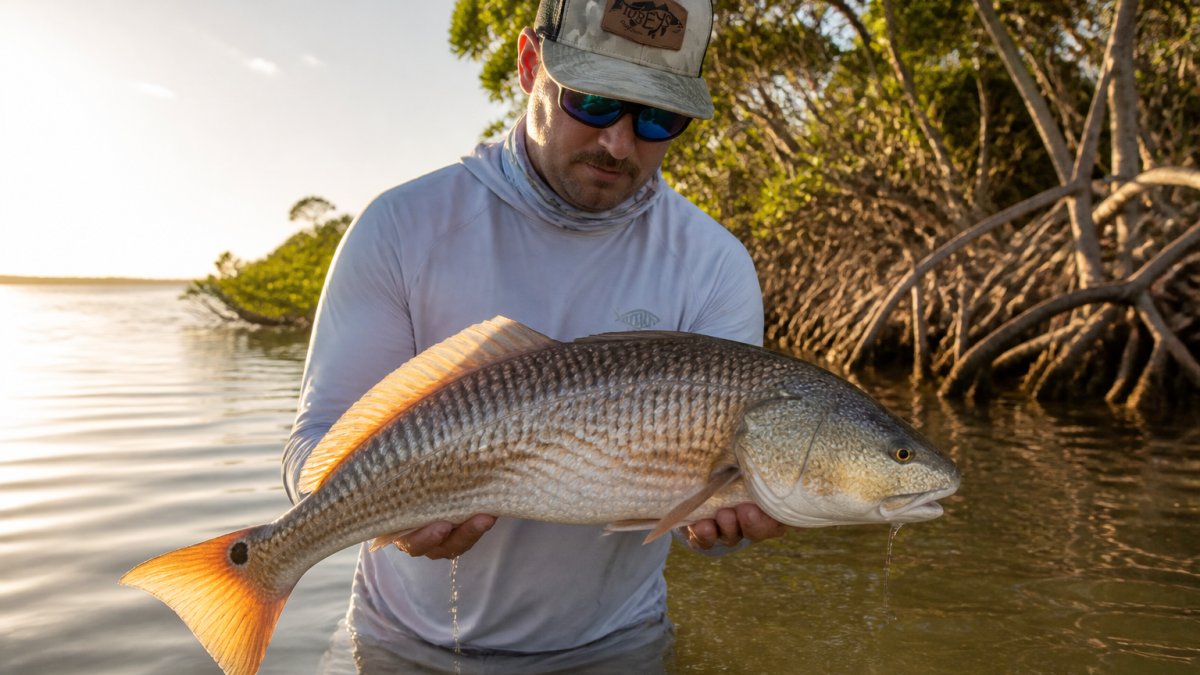
Redfish in saltwater systems like the Lower Laguna Madre hunt soft plastic swimbaits with remarkable consistency. These fish are aggressive feeders that respond to both the visual profile and the vibration of a moving swimbait. A 4-5 inch swimbait with a mullet or shad profile matches the primary forage redfish hunt daily.
Color selection and water clarity in coastal conditions
Clear saltwater demands natural colors. Silver, pearl, and tan swimbaits work best when visibility exceeds 2-3 feet. Redfish can see these colors clearly and recognize them as natural prey. In the Lower Laguna Madre on clear days, natural profiles consistently outproduce bright or unnatural colors.
Stained water shifts the equation. When visibility drops below 2 feet, redfish rely more on vibration and lateral line detection. Chartreuse, white, and darker profiles (black, dark green) become more effective. A white or chartreuse swimbait with a pronounced tail kick cuts through murky water better than a subtle silver profile.
Water temperature also influences color choice. Cooler water (below 60 degrees) favors darker, more muted colors. Warmer water (above 75 degrees) allows brighter profiles to work. This applies across both saltwater and freshwater systems.
Retrieve speed and depth control in shallow and deep water
Shallow water redfish (1-3 feet) demand a slow, deliberate retrieve. A steady roll at 1-2 feet per second keeps the swimbait in the strike zone without spooking fish. Use a weedless rig or unweighted swimbait to maintain the shallow presentation. An unweighted swimbait on a simple hook allows maximum freedom of movement and minimal disturbance.
Deep water redfish (4-8 feet) require a weighted jig head to reach bottom and maintain contact. A 1/4 to 3/8 ounce head lets you work the swimbait near structure where redfish hold. The retrieve speed increases slightly in deeper water, a moderate roll at 2-3 feet per second, because the fish have more time to react to the lure's approach.
Current direction matters as much as depth. In the Lower Laguna Madre, tidal current pushes water through channels and flats. Position yourself upcurrent and cast downcurrent, letting the swimbait drift and swim naturally with the flow. This presentation looks more realistic and triggers more bites than casting across current or upcurrent.
Soft Plastic Versus Hard Swimbaits: When Each One Wins
Casting distance and versatility in cover
Hard swimbaits cast farther. The solid body and internal weight allow long casts that reach distant structure. If you need to reach fish 60+ feet away, a hard swimbait outperforms soft plastic every time. Hard swimbaits also maintain depth more consistently during the retrieve, which matters when you're targeting specific depth zones.
Soft plastic swimbaits excel in versatility. You can rig them multiple ways, jig head, weedless, weighted hook, or unweighted. This flexibility lets you adapt to different cover and depths without changing lures. In thick grass or around timber, a weedless soft plastic swimbait navigates obstacles that would hang up a hard lure constantly.
Casting distance in saltwater matters less than in freshwater because redfish and trout often hold in shallow water close to shore. The Lower Laguna Madre's shallow flats mean most productive fishing happens within 40 feet of your boat. A soft plastic swimbait's versatility becomes more valuable than a hard lure's casting distance.
Bite response and fish landed comparison
Hard swimbaits generate more aggressive bites in some conditions. The solid body produces stronger vibrations and a more pronounced profile that triggers immediate strikes from competitive fish. In clear water with high visibility, hard swimbaits sometimes outproduce soft plastics.
Soft plastic swimbaits hook fish more reliably. The plastic gives slightly when a fish strikes, allowing better hook penetration. Hard swimbaits have a stiffer body that can cause fish to throw the hook if they don't fully commit to the bite. In situations where fish are cautious or bite softly, soft plastics land more fish.
Durability tips the scale toward soft plastics for most anglers. Hard swimbaits cost significantly more and require more maintenance. Soft plastics cost less and offer better versatility across different rigs and presentations. Unless you're specifically targeting deep water or need extreme casting distance, soft plastic swimbaits deliver better overall value and results.
Beginner-Friendly Setup and Total Tackle Requirements
Starting with soft plastic swimbaits requires minimal gear. You need a rod and reel rated for the weight you're casting, a simple selection of swimbaits, and basic rigging materials. A 6-7 foot medium-power rod handles most freshwater and saltwater situations. Pair it with a reel that holds 150+ yards of line.
For rigging, start with 1/4 ounce jig heads in 2/0 and 3/0 sizes, a few wide-gap hooks for weedless rigging, and a selection of 4-5 inch swimbaits in natural colors (silver, pearl, tan, white). This basic kit covers freshwater bass fishing and saltwater redfish and trout in the Lower Laguna Madre.
Line choice matters. Freshwater anglers use 12-20 pound braided line for better sensitivity and casting distance. Saltwater anglers bump up to 20-30 pound braided line to handle rougher conditions and larger fish. A 12-20 pound fluorocarbon leader (2-3 feet) improves bite rates in clear water by reducing visibility.
Beginners often overcomplicate rigging. Start with a simple jig head setup: tie a jig head directly to your main line, thread the swimbait on the hook, and cast. Once you're comfortable with that, experiment with weedless rigging and different jig head weights. The basic jig head approach catches fish and teaches you how the lure moves through water.
Setup Component | Freshwater | Saltwater |
|---|---|---|
Rod Length | 6-6.5 feet | 6.5-7 feet |
Line Weight | 12-20 lb braided | 10-30 lb braided |
Jig Head Size | 1/8-1/4 oz | 1/8,3/16,1/4 oz |
Hook Size | 2/0-3/0 | 3/0-4/0 |
Swimbait Length | 4-5 inches | 4-5 inches |
The Real Answer: Are They Worth It?
Soft plastic swimbaits are worth buying if you fish regularly and want lures that actually catch fish. They're not a miracle solution, no lure is, but they work across enough situations and fish species that they belong in every angler's tackle box.
The value proposition is straightforward. A soft plastic swimbait costs less than a hard swimbait, offers more rigging versatility, and produces consistent results in both freshwater and saltwater. In the Lower Laguna Madre, they catch redfish and trout reliably. In freshwater lakes, they catch largemouth bass at a rate comparable to more expensive lures.
The durability trade-off is real. Cheap swimbaits don't last long. Quality swimbaits cost more upfront but spread that cost across more fish. The decision comes down to whether you value versatility and reasonable cost over maximum durability and premium features.
At Tubey's Outfitters, we've tested soft plastic swimbaits extensively in both freshwater and saltwater conditions. Our lures are designed with proven colors, strong action, and the kind of quality we trust on our own boat. These features matter more than brand name or price point.
Soft plastic swimbaits deliver real results for anglers fishing freshwater lakes and saltwater systems like the Lower Laguna Madre. The combination of realistic action, versatile rigging options, and reasonable durability makes them worth the investment. Whether you're chasing largemouth bass or redfish, a quality soft plastic swimbait in your tackle box increases your odds of landing more fish. American Sportfishing Association research on lure effectiveness confirms that realistic forage imitation consistently outperforms novelty lures across freshwater and saltwater species. At Tubey's Outfitters, we build soft plastic swimbaits designed to put more fish in the boat. Our swimbaits are poured and tested by anglers who fish both freshwater lakes and coastal flats. Field testing guidelines from the International Game Fish Association inform our quality standards and performance expectations. Explore our soft plastic swimbait selection and discover why anglers trust Tubey's Outfitters for gear that delivers results on the water. SHOP TUBEYS GEAR and experience the difference authentic, fisherman-tested equipment makes in your catch rate.
Frequently Asked Questions
How long will soft plastic swimbaits last before they wear out?
A quality soft plastic swimbait typically lasts 5-15 fish or 2-4 hours of active fishing, depending on plastic durability and how hard the fish bite. Saltwater redfish and speckled trout tend to damage lures faster than freshwater bass because of sharper teeth and aggressive strikes. Storing them in a cool, dry place away from direct sunlight extends lifespan. Budget for replacing lures regularly if you fish frequently.
What size soft plastic swimbait should you use for redfish versus bass?
For redfish and trout in saltwater inshore, use 4-6 inch swimbaits that match local forage like mullet and pinfish. For largemouth bass in freshwater, 3-5 inch lures work well in most conditions. Match the bait length to what fish actually eat in your water—oversized lures reduce bite rates, while undersized ones miss larger fish. Start with 4 inches as a versatile middle ground.
Are soft plastic swimbaits more effective than hard swimbaits?
Soft plastics excel in cover, weeds, and shallow water because they're weedless and have natural tail action that triggers bites. Hard swimbaits cast farther and work better in open water and deeper zones where swimming action from a rigid body gets noticed. Neither is universally better—choose based on your fishing location. Saltwater anglers often prefer soft plastics for shallow redfish flats; freshwater anglers use both depending on conditions.
How do you rig a soft plastic swimbait so it swims correctly?
Thread the hook through the nose and out the back of the swimbait's body to keep it straight. Use a jig head for weighted rigs that reach depth quickly, or a weedless hook for shallow water and cover. Ensure the hook eye sits flush with the lure's mouth so the tail swings freely. Test the retrieve in shallow water first—the tail should kick smoothly without rolling or spinning.