 blog
Chartreuse Fishing Lures: When and How to Fish Them
Table of Contents
- Why Chartreuse Fishing Lures Trigger More Strikes
- When to Use Chartreuse Fishing Lures: Water Clarity and Depth
- Best Lure Types That Use Chartreuse Effectively
- How to Rig Chartreuse Jigs for Bass and Crappie
- Chartreuse vs White Fishing Lures: Which Color Wins?
- Retrieval Speed and Tail Action: Making Chartreuse Work
- Environmental Impact of Soft Plastic Baits
- Frequently Asked Questions
Last Updated: September 25, 2026
Why Chartreuse Fishing Lures Trigger More Strikes
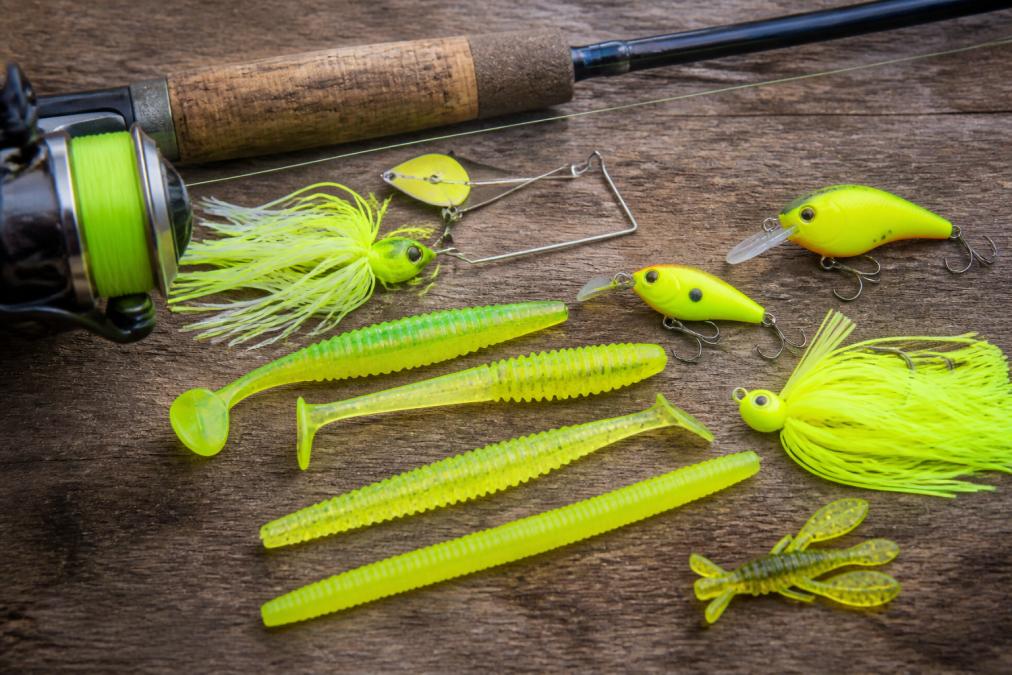
Chartreuse fishing lures work because they sit at a rare intersection of the light spectrum: a color the human eye reads as loud and unnatural, but that predatory fish detect with unusual clarity against almost any backdrop. At Tubey's Outfitters, we pour and fish these baits from clear Hill Country reservoirs to muddy coastal flats, and the pattern holds: when visibility drops, chartreuse gets bit.
The reason comes down to physics, not luck.
The Light Spectrum Behind Chartreuse Visibility
Chartreuse is a fluorescent yellow-green near the peak of human visual sensitivity, which is why it looks almost electric. Underwater, red light disappears first with depth, then orange, then yellow. Chartreuse holds its brightness longer than most warm colors because it reflects strongly in the green-yellow band that penetrates deeper in stained water.
How Chartreuse Looks to Bass, Crappie, and Trout
Bass, crappie, and trout all possess color vision, but their sensitivity differs. Bass have strong contrast detection, so a chartreuse bait stands out against a dark bottom. Crappie respond to flash and movement more than precise hue. Trout, especially in stained rivers, key on bright attractor colors when visibility is limited.
When to Use Chartreuse Fishing Lures: Water Clarity and Depth
Knowing when to use chartreuse fishing lures is the difference between a full livewell and a day of casting practice. Reach for chartreuse when water clarity is poor, when you're fishing deeper than light penetrates well, or when you need a strike trigger in low-light windows.
Water Clarity vs. Depth: A Quick Reference Chart
Use this as a starting point, then adjust based on what the fish tell you.
| Water Clarity | Best Depth Range | Chartreuse Priority |
|---|---|---|
| Clear (visibility 6+ ft) | Any | Low to moderate |
| Stained (2-6 ft) | Mid to deep | High |
| Murky (under 2 ft) | Shallow to mid | Very high |
| Muddy (inches) | Shallow | Maximum |
Best Lure Types That Use Chartreuse Effectively
Not every lure style carries chartreuse well. The color works best on baits with strong tail action or built-in flash, because movement and reflection amplify the visibility advantage. Crankbaits, jigs, and soft plastics lead the pack, but model and action matter as much as color.
Crankbaits and Squarebills
Squarebill crankbaits in chartreuse excel around shallow cover, where their wide wobble and deflection off wood and rock trigger reaction strikes. A chartreuse squarebill through stained shallows is one of the most reliable patterns in bass fishing. Look for baits that run 2 to 5 feet, with a chartreuse belly and contrasting back so fish get a bright target with a defined silhouette.
Soft Plastic Baits and Curly Tail Grubs
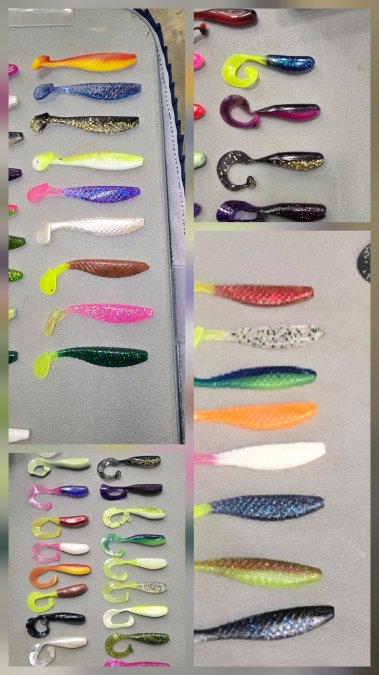
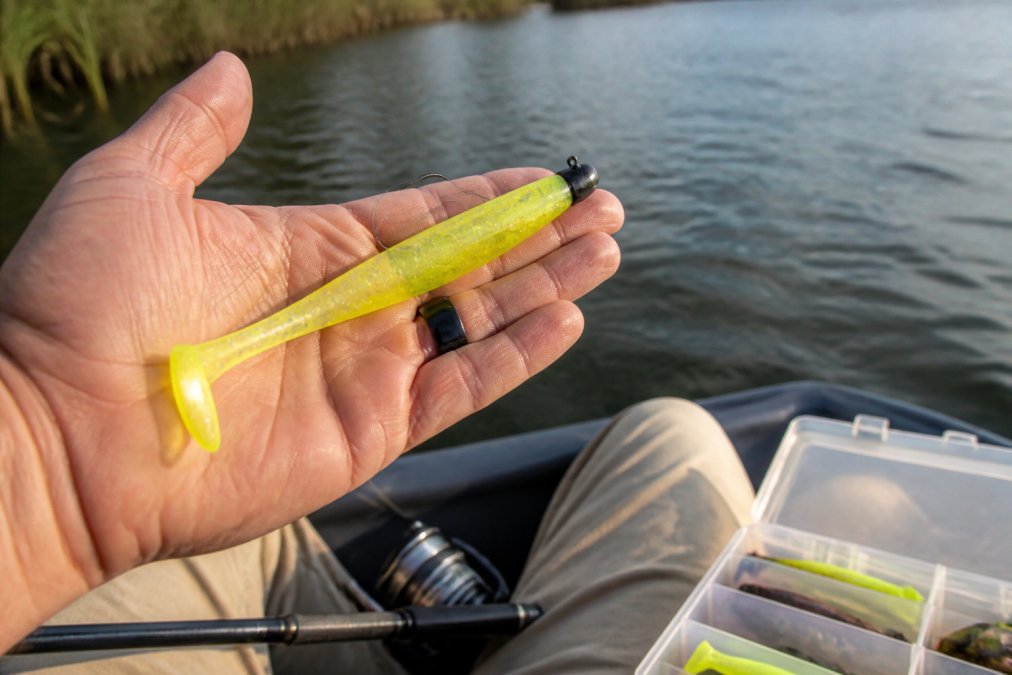
Soft plastic baits are where chartreuse shines brightest. A curly tail grub in chartreuse puts out constant tail action and a high-contrast profile that predatory fish lock onto, while vibrating swim baits move water and flash simultaneously. That combination of tail action and color contrast turns a following fish into a striking one.
Spinnerbaits and Chatterbaits
Spinnerbaits with a chartreuse skirt and chartreuse blades are a classic stained-water tool: the blades throw flash while the skirt adds bulk and contrast. A 3/8-ounce spinnerbait with a chartreuse-and-white skirt and a single Colorado blade is proven for slow-rolling murky water, because the big blade moves water and the chartreuse stays visible even when the flash is muted.
Jigs and Jig Trailers
A chartreuse jig with a chenille body and a curly tail trailer is a mid-depth staple for bass; the chenille holds color well and the trailer adds action. For crappie, downsize to a 1/16- or 1/8-ounce jig head with a small chartreuse grub, the lighter head falls slower, keeping the bait in the strike zone longer when fish are suspended.
How to Rig Chartreuse Jigs for Bass and Crappie
Rigging chartreuse jigs correctly comes down to matching the jig head to the bait's action and your fishing depth. For bass, a chartreuse jig with a chenille body and curly tail trailer on a 1/4 to 3/8 ounce head covers most mid-depth scenarios. For crappie, downsize to a 1/16 or 1/8 ounce head with a small chartreuse grub.
A simple approach:
- Thread the soft plastic straight to keep the tail running true
- Match jig head weight to depth and current
- Use a black and chartreuse or purple and chartreuse combination when fish short-strike
- Check the hook set point stays exposed after rigging
Chartreuse vs White Fishing Lures: Which Color Wins?
Chartreuse vs white fishing lures is the debate that never ends, and each wins in different conditions. White is a natural baitfish color that excels in clear water and bright light; chartreuse is a high-contrast attractor that wins in stained water, low light, and deep presentations.
Color Combinations That Pair Well With Chartreuse
Single-color baits work, but combinations often work better:
- Black and chartreuse: the classic contrast pairing, excellent in stained water
- Purple and chartreuse: strong in low light and around vegetation
- Chartreuse and white laminate: blends attractor flash with natural tone
- Chartreuse with a dark back: adds silhouette definition for ambush predators
A laminate bait, where two colors are poured together, gives you the best of both. The chartreuse half drives visibility while the darker half keeps the profile believable.
Retrieval Speed and Tail Action: Making Chartreuse Work
Retrieval speed controls how much tail action your bait produces, and tail action converts a chartreuse lure from visible to irresistible. But speed also changes how the chartreuse pigment reads to a fish, and that interaction is where most anglers leave strikes on the table.
How Speed Changes What the Fish Sees
A chartreuse bait moving slowly presents a steady, high-contrast target the fish can track, letting the color draw attention from a distance. A fast-moving chartreuse bait presents a flashing, blurred target: the color still draws attention, but the fish has less time to commit, which is why reaction strikes happen on fast retrieves and feeding strikes on slow ones.
Matching Speed to Depth and Light
Light penetration drops with depth, and chartreuse holds its brightness longer than most colors, so a chartreuse bait fished deep is often working in low light even at midday. There, a slow, steady retrieve with a pronounced tail thump usually beats a fast burn, because fish rely on contrast and vibration rather than flash.
Speed by Lure Type
Different lure styles have different speed windows. A chartreuse squarebill crankbait blows out and loses action if cranked too fast. A chartreuse spinnerbait can be slow-rolled or burned, depending on water temperature and fish mood. A chartreuse soft plastic on a jig head can be dragged, hopped, or swam, each giving the tail a different action.
Reading the Retrieve
The best feedback comes from the fish. Follows without strikes mean they see the bait but aren't committing, slow down, add a pause, or switch to a darker trailer to change the profile. No attention at all means the bait may be running too deep, too shallow, or too fast. Adjust one variable at a time and let the chartreuse color do its job once the speed is right.
Environmental Impact of Soft Plastic Baits
Soft plastic baits are effective, but they don't break down quickly, and lost baits accumulate in lakes and rivers. The practical response is simple: rig so baits stay put, retrieve snagged plastics when you can, and dispose of torn baits properly instead of dropping them overboard.
Frequently Asked Questions
When should I use chartreuse fishing lures?
Chartreuse fishing lures work best in stained or murky water where light penetration is limited. The fluorescent yellow-green color stays visible at depths where natural colors fade. Use them on overcast days, after rain, or in low-light conditions. In clear water, switch to natural or translucent colors unless you need a high-contrast attractant to trigger reaction strikes from pressured fish.
How do I rig chartreuse jigs for bass and crappie?
Rigging chartreuse jigs depends on the target species. For bass, use a 3/8-ounce jig head with a chartreuse curly tail grub, threading the hook through the nose and out the back. For crappie, a 1/16-ounce jig head with a smaller chartreuse tube or minnow-style plastic works well. Match the jig head weight to water depth and current. Always check hook set and tail action before casting.
Does chartreuse work better in murky or clear water?
Chartreuse outperforms in murky or stained water because its fluorescent properties reflect more light than natural colors. In clear water, chartreuse can still work as a high-contrast attractant, but it may spook wary fish. A good rule: if you can see your lure 2 feet down, use chartreuse; if you can see it 6 feet or more, switch to natural patterns or white.
What color do bass see chartreuse as?
Bass have two cone types for color vision, so they see chartreuse as a bright yellow-green, likely with higher intensity than humans do. This makes it stand out against blue-green water backgrounds. In low-light or stained conditions, chartreuse appears as a glowing high-contrast target, which triggers predatory fish to strike. This is why chartreuse fishing lures remain a staple for bass anglers.
Chartreuse fishing lures only pay off when you match them to the conditions in front of you. Stained water, low light, and deep presentations reward high-contrast color, while clear, bright conditions call for restraint. Tubey's Outfitters builds soft plastics and custom rods designed, poured, and tested by fishermen for exactly these decisions, with gear that holds its action and color cast after cast. When you're ready to put more fish in the boat, shop Tubey's gear and fish with confidence.